
How Long Do Water Heaters Last? Lifespan by Type
Water heaters last 8 to 12 years as storage tanks and 15 to 20 or more years as tankless units. How long a hot water heater lasts depends on three factors: the type of unit, the quality of the water running through it, and the maintenance it receives. This guide lists water heater lifespans by type and fuel, then takes a closer look at electric models, the most common water heater in St. Petersburg homes. It also covers what shortens a water heater's life in Florida, hard water above all, and the habits that extend it: annual maintenance, anode rod replacement, and the right temperature setting. Finally, it shows how to read your unit's age from its serial number and how to tell when an older water heater is near the end, the point where the repair-or-replace decision begins.
Water Heater Lifespan by Type and Fuel
Water heater lifespan by type runs from 2 to 3 years for point-of-use units to more than 20 years for tankless models, with standard tanks lasting 8 to 12 years between those extremes. The table below lists the typical lifespan of each water heater type installed in Florida homes.
| Water Heater Type | Typical Lifespan | Notes |
|---|---|---|
| Electric tank water heater | 8–12 years | Elements and thermostats are replaceable; the tank itself is not |
| Gas tank water heater | 8–12 years | Burner, thermocouple, and gas valve are serviceable; the tank decides the end date |
| Tankless water heater | 15–20+ years | Every component is replaceable; annual descaling protects the heat exchanger |
| Heat pump water heater | 10–15 years | Compressor and tank age on separate schedules; well-maintained units can reach 20 |
| Solar water heater | 15–20 years | Collectors often outlast the system; the storage tank ages like a standard tank |
| Point-of-use water heater | 2–3 years | Small under-sink units treated as replaceable fixtures |
This table shows that tankless water heaters outlast every tank style, and that fuel matters less than design: gas and electric tank water heaters share the same 8 to 12 year range.
Electric water heaters sit at the top of that shared range when their elements and thermostats are serviced on time, and the next section covers them in detail. Gas water heaters last 8 to 12 years as well; their burners, thermocouples, and gas valves are all replaceable parts, so the steel tank is what sets the expiration date. Tankless water heaters last longer because there is no tank to corrode; the heat exchanger is the part that ages, and yearly descaling keeps it working. Point-of-use water heaters, the small Ready Hot and InstaHot units we install under kitchen sinks and at some bathroom sinks, last 2 to 3 years and are best treated as replaceable fixtures rather than long-term equipment.
Brand changes the warranty more than the lifespan. Rheem, A.O. Smith, State, Ruud, and Bradford White water heaters all fall inside the ranges above. Residential tanks typically sell in 6, 9, and 12 year warranty versions of the same tank, while the commercial water heaters we install carry 15 year manufacturer warranties, so the warranty tells you what the manufacturer expects, not the full life of the unit. We install and recommend State tanks and Rinnai tankless units more than any other brands.
How Long Do Electric Water Heaters Last?
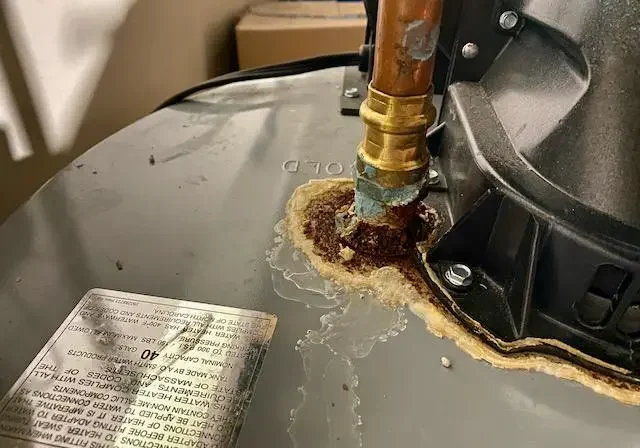
Electric water heaters last 8 to 12 years. An electric water heater has two serviceable parts, the heating elements and the thermostats, and replacing them when they fail can push a unit toward the top of that range. Elements burn out well before the tank does, especially where scale coats them, so a single element swap can add years of service to a water heater that would otherwise be written off.
Electric models are the most common and most economical water heater setup in Florida homes, which is why the 30 and 40 gallon electric tanks are the units we stock in the greatest numbers for St. Petersburg replacements. The lifespan math is the same across sizes: a 40 gallon electric water heater and a 50 gallon electric water heater both last 8 to 12 years, because capacity does not change how fast a tank corrodes. What ends an electric water heater is the tank shell itself; once the steel corrodes through, no part swap brings it back.
What Shortens a Water Heater's Life in Florida?
Hard water scale, sediment cycles, salt-air corrosion, and skipped flushes shorten a water heater's life in Florida. These are the four factors we see cutting water heaters short across Pinellas County:
Hard water scale: Pinellas County water carries dissolved minerals that bake onto a water heater's elements and tank bottom, forcing the unit to work harder for every degree of heat.
Sediment cycles: every heating cycle compacts mineral sediment at the base of the tank, and a sediment-loaded water heater loses capacity, efficiency, and years.
Humidity and salt-air corrosion: coastal moisture attacks a water heater's fittings, connections, and exposed steel, especially in garages and outdoor closets near the water.
Skipped flushes: sediment that an annual flush would remove instead stays put and hardens, and an unflushed water heater ages faster than a maintained one every time.
Hard water deserves the closest look because it drives the other factors. What exactly does Pinellas County water do to your tank, and which fixes actually work? Our guide, Hard Water and Your Water Heater: Pinellas County Effects & Fixes, covers the local effects and the fixes that pay off.
The sediment problem is not theoretical. On St. Petersburg service calls we regularly open a drain valve and get nothing out, because sediment has packed the bottom of the tank solid. A water heater that can no longer be drained is one of the criteria we use to recommend replacement instead of repair, because at that stage no flush can undo the damage. Caught earlier, most of that lost life is recoverable with maintenance, which is what the next section covers.
How to Make Your Water Heater Last Longer
You should flush your water heater every year, replace its anode rod on schedule, keep the temperature at 120°F, and check its pressure to make it last longer. These four habits counter every major cause of early water heater failure:

Flush the tank annually. Flushing drains the sediment out of a water heater before it hardens; manufacturers call for a flush every 6 to 12 months, and hard water areas like Pinellas County belong at the short end of that interval. Would you rather not handle the hoses and valves yourself? Our annual water heater maintenance service takes care of it.

Replace the anode rod on schedule. The anode rod is a sacrificial metal rod that corrodes so the water heater's tank does not, and once it is consumed, the tank starts corroding in its place. When should yours be swapped? Our guide, Water Heater Anode Rods: What They Are & When to Replace, covers the schedule; plan on a new rod every 3 to 5 years, and sooner with hard water.

Keep the temperature at 120°F. 120°F is the standard setting for a residential water heater; 140°F is reserved for special cases, such as sanitizing dishes in homes without a dishwasher. A water heater running at 120°F builds scale more slowly and puts less thermal stress on the tank.

Check the pressure and the expansion tank. Heated water expands, and in a closed plumbing system that expansion drives pressure up against the water heater's tank and relief valve. An expansion tank absorbs the swing, so a working one spares the water heater a fatigue cycle on every heat-up.
Every habit on this list works better when you know how old your water heater actually is, and the serial number holds that answer.
How Old Is Your Water Heater Right Now?
Your water heater's age is printed on the tank, encoded in the serial number on the manufacturer's label. Many brands put the date first, so a serial number starting 0619 marks a water heater built in June 2019, though each manufacturer uses its own format. Not sure how your brand encodes it? Our How Old Is My Water Heater? Serial Number Lookup by Brand decodes the format for every major brand.
Is Your Water Heater Near the End?
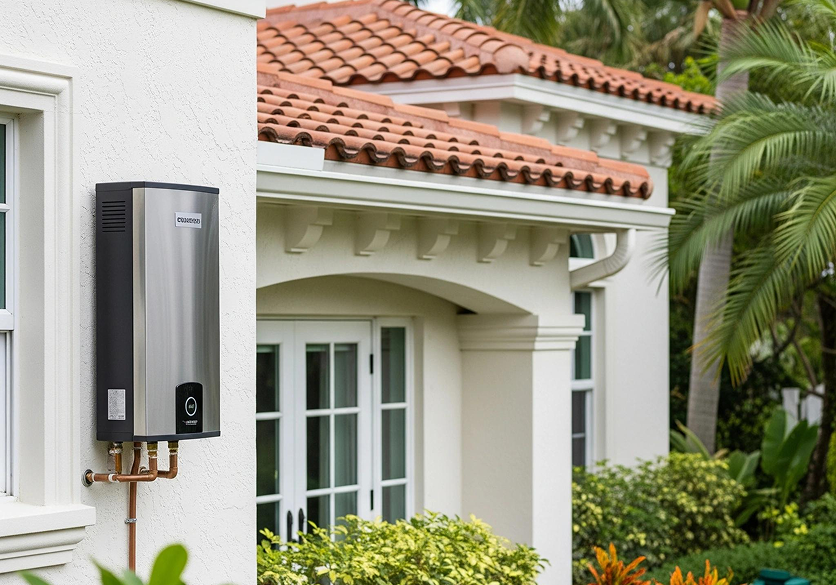
A water heater older than 10 years is near the end of its expected life and carries an elevated leak risk. Past that threshold, every repair bill deserves a second look before you pay it, and our repair-or-replace decision guide walks through that math step by step.
Age alone is not the whole verdict, so pair it with what the water heater is telling you. Watch for rust-tinted hot water, rumbling or popping sounds during heating, moisture around the base, and hot water that runs out faster than it used to. One warning sign on a 10 year old water heater is a maintenance conversation; two or more warning signs on a unit past 10 years are a replacement conversation.
A tankless water heater commonly lasts 20 years, while a tank water heater rarely reaches 20 years without exceptional maintenance.
Not Sure How Much Life Is Left?
FL Water Heater Pros gives you a straight answer on how much life your water heater has left, free with any service call in St. Petersburg. We check the age, the anode, and the sediment load, then tell you whether the smart money is on keeping your water heater or replacing it. Call (727) 855-8080 for a free estimate over the phone, with upfront pricing and no hidden fees.
Fast Priority Response
Request an Immediate Quote
Units stocked & ready for same-day dispatch in Pinellas County.