
Guides
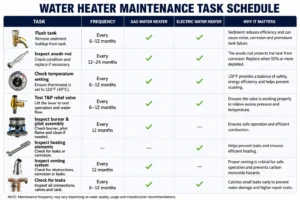
Water Heater Maintenance Checklist: What to Do & How Often
Water Heater Maintenance Checklist: What to Do & How Often A water heater maintenance checklist should include monthly visual inspections, periodic temperature checks, annual professional maintenance, and equipment-specific tasks such as tank flushing, anode rod inspection, and tankless descaling. Following a consistent schedule can help identify leaks, sediment buildup, corrosion,…
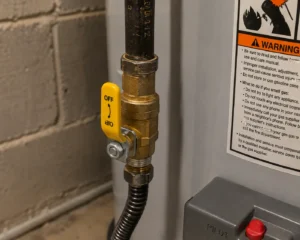
How to Turn a Water Heater On or Off (Gas & Electric)
How to Turn a Water Heater On or Off (Gas & Electric) To turn off a water heater, use the shutdown procedure specified by its manufacturer. Electric water heaters are typically switched off at their dedicated circuit breaker or disconnect, while gas water heaters use a gas control with approved…
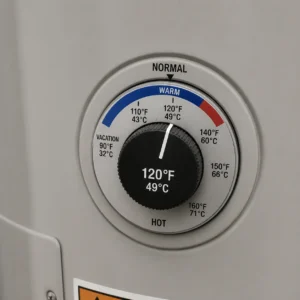
Water Heater Temperature: The Right Setting (120°F vs. 140°F)
Water Heater Temperature: The Right Setting (120°F vs. 140°F) For many households, 120°F is a practical hot water temperature that helps reduce scalding risks and unnecessary energy use. However, some water heater systems may require storage temperatures of 140°F or higher to help manage Legionella bacteria, with mixing valves used…
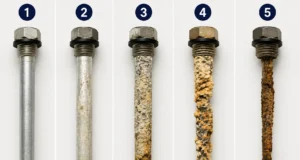
Water Heater Anode Rods: What They Are & When to Replace
Water Heater Anode Rods: What They Are & When to Replace A water heater anode rod is a corrosion-protection component that helps prevent the steel tank from rusting internally. Often called a sacrificial anode rod, it gradually corrodes instead of the exposed steel surfaces inside the water heater. When the…
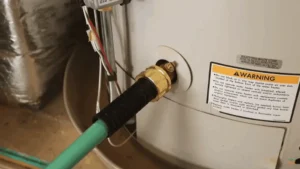
How to Flush a Water Heater (Step-by-Step)
Flushing a water heater removes loose sediment and mineral deposits that collect at the bottom of a storage tank. The process generally involves shutting down the heating system, allowing the water to cool, connecting a hose to the drain valve, and draining water until the sediment clears. However, the correct…
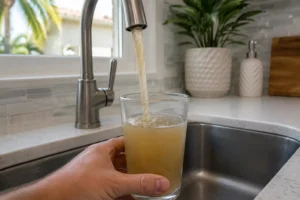
Rusty or Smelly Hot Water: Causes & Fixes
Rusty or smelly hot water often points to sediment buildup, corrosion, anode rod problems, or sulfur-related bacteria inside the water heater or plumbing system. If your hot water looks brown, yellow, or reddish, or smells like rotten eggs, the first step is to determine whether the problem affects only hot…
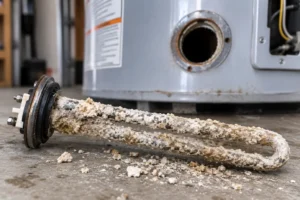
Water Heater Making Noise? What Popping & Rumbling Mean
A water heater making popping, rumbling, or knocking noises often has sediment buildup inside the tank. As minerals settle at the bottom of the water heater, they can interfere with normal heating and cause unusual sounds when the burner or heating elements operate. While some noises are harmless, persistent rumbling,…
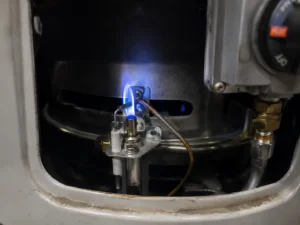
How to Relight a Water Heater Pilot Light
To relight a water heater pilot light, follow the lighting instructions printed on your gas water heater. Most standing-pilot models require turning the gas control to OFF, waiting at least five minutes, selecting PILOT, and using the built-in igniter while holding the pilot control. However, the exact procedure varies by…
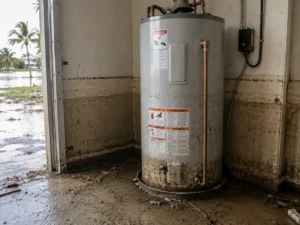
Flooded or Hurricane-Damaged Water Heater: What Florida Homeowners Should Do
If your water heater was flooded during a hurricane, do not turn it back on. Floodwater can damage electrical connections, gas controls, burners, insulation, and other internal components. Even when the outside of the unit appears dry, hidden damage may make it unsafe to operate. Florida homeowners face this problem…
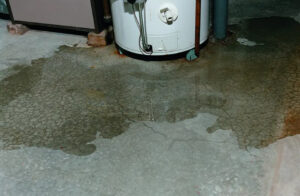
Water Heater Leaking: What to Do, Causes & Fixes by Location
A leaking water heater is a plumbing failure in which water escapes the tank, its fittings, or its valves, and the right response comes down to two questions: where the water is coming from and how fast it is coming. A slow drip at a hot water heater’s drain valve…