
Tank vs. Tankless at a Glance
Tank and tankless water heaters separate on eight factors: installed cost, lifespan, space, hot water supply, energy efficiency, maintenance, Florida fit, and who each format suits best. The table below compares the two on all eight, using the same figures the rest of this page explains in depth.
| Factor | Tank water heater | Tankless water heater |
|---|---|---|
| Installed cost | $1,200–$2,500 locally; ~$1,850 standard replacement | $1,400–$5,600; typically $2,600–$2,800 |
| Lifespan | 8–12 years | 15–20+ years |
| Space | Floor-standing; claims a closet or garage corner | Wall-mounted; frees the floor entirely |
| Hot water supply | Finite; 30–80 stored gallons, then a recovery wait | Endless while a tap runs; capped by flow rate (GPM) |
| Energy efficiency | Standby loss; the tank reheats stored water around the clock | No standby loss; the unit heats water only on demand |
| Maintenance | Annual tank flush | Annual heat exchanger descale |
| Florida fit | Warm groundwater speeds tank recovery | Warm groundwater raises tankless output; no freeze concerns |
| Best for | Lowest upfront cost, fast like-for-like swaps | High-demand households, long-horizon owners |
This table shows the pattern that runs through the entire tank versus tankless comparison: the tank water heater wins the day you buy it, and the tankless water heater wins the years after. The U.S. Department of Energy publishes efficiency percentages for demand-type water heaters that put numbers on the standby-loss gap: for homes using 41 gallons or less of hot water daily, a tankless water heater is 24 to 34 percent more energy efficient than a storage tank, and for high-use homes near 86 gallons daily the advantage narrows to 8 to 14 percent. The dollars behind the first row deserve their own section, because upfront price is where most St. Petersburg homeowners start the decision.

Upfront and Lifetime Cost Compared
A tankless water heater costs more than a tank upfront, and the gap narrows over a 20-year horizon through lifespan and operating cost. The upfront numbers first: a tank water heater installs for $1,200 to $2,500 across the Tampa Bay area, and a standard like-for-like replacement through our shop runs around $1,850. A tankless water heater installs for $1,400 to $5,600, with most projects landing between $2,600 and $2,800, and a first-time conversion from a tank adds $1,000 to $1,500 on top for the venting, gas, and piping work. In practice, that puts a typical tankless install at roughly one and a half times a standard tank swap, and a full conversion at close to double.
The lifetime math is where the comparison turns. Tank water heaters last 8 to 12 years, so a 20-year stretch in the same St. Petersburg home usually means buying two tanks: two standard replacements at around $1,850 each totals roughly $3,700, while one tankless water heater at $2,600 to $2,800 can cover the same 20 years on a single install when it is descaled annually. Add operating cost and the gap narrows further, because a gas tankless carries the lowest operating cost of any water heater we install. That lifetime advantage is scoped, though: it holds for households that use enough hot water to feel the efficiency difference and stay in the home long enough to collect it. Wondering where your own job lands inside those ranges? St. Petersburg water heater prices breaks the numbers down line by line for every water heater type.
What Are the Downsides of Tankless?
The downsides of a tankless water heater are higher installation cost, gas line or electrical upgrades, the cold-water sandwich, annual descaling, and flow limits. Every tankless page we could have written without this list would be dishonest, so here is each one plainly:
Higher install cost: a tankless water heater runs $1,400 to $5,600 installed, and converting from a tank adds $1,000 to $1,500 beyond a like-for-like tankless swap.
Gas and electrical upgrades: a gas tankless water heater typically needs a ¾ inch gas line, and a whole-house electric tankless generally needs a 150-amp or larger panel, so older St. Petersburg homes often pay for utility upgrades before the unit itself.
Cold-water sandwich: a tankless water heater can deliver a brief slug of cool water between back-to-back draws, a quirk of on-demand heating that tank owners never meet.
Descaling: the tankless heat exchanger needs descaling at least annually, more often on hard water, at $100 to $350 per service and typically $150 to $250.
Flow limits: a tankless water heater delivers a fixed number of gallons per minute, and opening more fixtures than the unit is sized for splits that flow across all of them.
The reason some plumbers steer homeowners away from tankless water heaters is complexity, not performance: an on-demand unit has a control board, a flow sensor, and a modulating burner where a tank has a thermostat, and more components mean more potential callbacks for the installer. Fairness requires the same treatment for the tank, so the mirror-image list is next.
What Are the Downsides of a Tank?
The downsides of a tank water heater are standby heat loss, a finite hot water supply, an 8 to 12 year lifespan, end-of-life leak risk, and floor space. Point by point:
Standby loss: a tank water heater reheats its stored gallons around the clock, so you pay to keep water hot at 3 a.m. whether anyone uses it or not.
Finite supply: once the tank's 30 to 80 stored gallons are drawn down, the water heater needs recovery time, which is why the third consecutive shower in a busy household runs cold.
Shorter lifespan: tank water heaters last 8 to 12 years, roughly half the tankless span, because the steel tank itself corrodes and cannot be replaced the way a component can.
Leak and flood risk: an aging tank water heater stands over your floor holding up to 80 gallons, and when the tank wall finally fails, it fails wet.
Floor space: a tank water heater occupies a closet or garage corner for its entire service life, space a wall-mounted unit hands back.
We install and recommend both formats, so neither list above is a pitch for the other side: State is the tank brand we recommend and Rinnai is the tankless brand we recommend, and both earn it on the same jobs across Pinellas County. What the two lists cannot settle on their own is geography, and Florida changes the comparison more than most homeowners expect.
Which Is Better for Florida Homes Specifically?
Florida favors both water heater formats more than most states do, so the tank versus tankless verdict here comes down to the household rather than the climate. Warm groundwater helps both sides: a tankless water heater produces more gallons per minute in St. Petersburg than the same unit does up north, because the incoming water needs less of a temperature rise, and a tank water heater recovers faster for the same reason. Freeze protection, the standard northern objection to tankless, barely applies: outdoor wall mounts work here year-round. Florida garages comfortably fit either format, and our hard water pushes maintenance on both, an annual flush for the tank and an annual descale for the tankless.
Two Florida-specific notes sharpen the choice. First, hurricane season: during a power outage, a gas tank water heater with a standing pilot keeps making hot water, while a gas tankless water heater still needs 120-volt power for its ignition and controls, so it stops with the grid unless the home has backup power. Second, fuel: electricity is Florida's dominant water heating fuel, and for most electric-only homes the tank remains the economical default, while homes with a gas line get the strongest tankless case in the state, because a gas tankless pairs the lowest operating cost with unlimited supply. The most common version of that question has a number attached to it, so the 50-gallon case gets its own answer next.

Can a Tankless Replace Your 50-Gallon Tank?
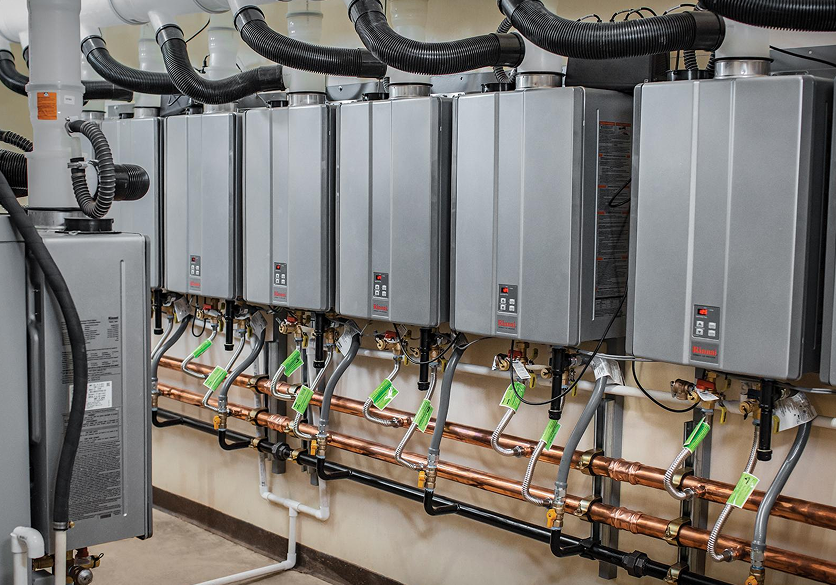
Yes, a tankless water heater can replace a 50-gallon tank in nearly any St. Petersburg home, provided the unit is sized to your peak demand and your fuel supply can feed it. Sizing a tankless water heater works on flow instead of storage: a 3.5 to 5 GPM unit covers one to two simultaneous fixtures, 5 to 7 GPM covers two to three, and 7 to 9 or more GPM covers three to four, which is the territory a 50-gallon tank household usually occupies. The second condition is capacity: a gas tankless needs a gas line sized for its burner, and a whole-house electric tankless needs the panel amperage to match, so the replacement question is really a sizing question plus a fuel question. Which GPM tier matches your bathroom count and habits? Our water heater sizing guide walks through the math for tanks and tankless units alike. Once the size is settled, the remaining question is what the changeover actually looks like in your house.
What Does Switching Involve?
Switching from a tank to a tankless water heater involves new venting, gas or electrical upsizing, wall-mounting, and repiping, which is why a conversion is a day's work instead of a 3-hour swap. A gas tankless water heater vents through its own dedicated sealed vent run to the outside, separate from whatever flue the old tank used, and the gas line frequently gets upsized to ¾ inch to feed the burner. An electric tankless needs a dedicated circuit, which your electrician provides before we hang the unit; our tankless installations include everything except that wiring. The unit itself mounts on the wall, the water lines are repiped to meet it, and the old tank leaves with us. The conversion work is what the $1,000 to $1,500 premium over a like-for-like tankless swap pays for. Every switch is permitted and inspected, and the permit is always included in our price rather than added to it. Want the full changeover shown step by step, from the old tank out to the first endless shower? Our page on professional tankless installation in St. Petersburg covers the whole process. Before you commit to either side of the pair, though, one more format deserves a seat at the table.

Is There a Third Option?
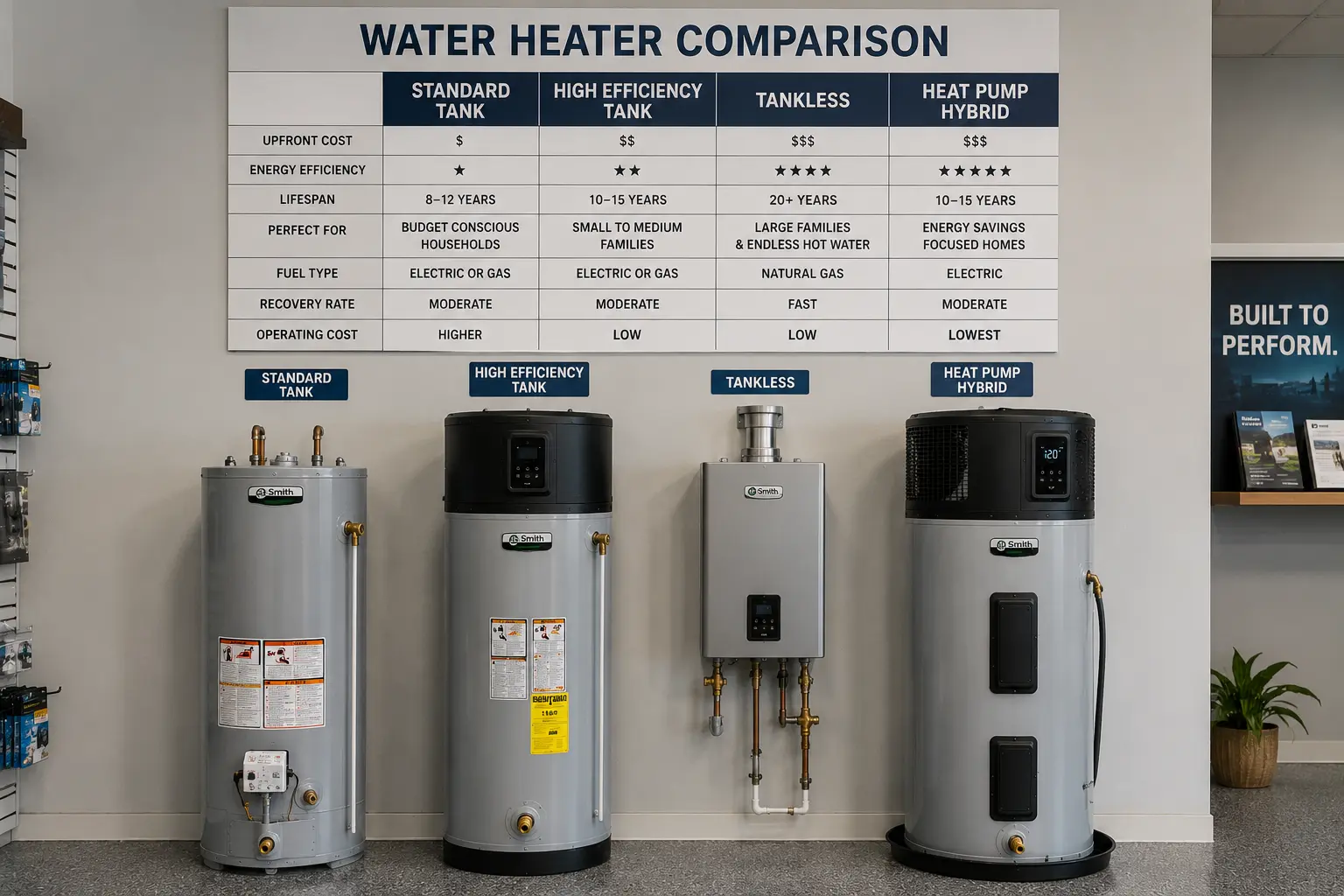
Yes, the heat pump water heater is the third option, and for all-electric Florida homes it often beats both sides of the tank versus tankless debate. A heat pump water heater keeps the storage-tank format but pulls heat out of the surrounding air instead of generating it with elements, and a warm, humid Florida garage feeds it exactly the air it wants all year. For homes without a gas line, that makes the hybrid format the operating-cost champion the gas tankless cannot be, and Duke Energy Florida currently rebates up to $800 on qualifying units. How does the hybrid compare against the water heater you own now? Hybrid heat pump water heaters get their own full breakdown. Solar water heaters round out the field for homeowners chasing the lowest energy use of all; we do not install solar, so that mention is informational rather than a service. An honest comparison names every option, including the ones outside the question you searched.
A tankless water heater is worth it in Florida for homes with a gas line, higher-than-average hot water use, and owners planning to stay 10 or more years; for a budget-driven swap in an all-electric home, a tank restores hot water for far less.
Get a Side-by-Side Quote
Florida Water Heater Pros quotes the tank and the tankless option in one free phone call: describe your home and your hot water habits, and you get both prices side by side with no hidden fees. Our professionals perform the installations, we stock tank water heaters in every common size at our St. Petersburg shop, and estimates are free over the phone. Call (727) 855-8080 and settle the tank versus tankless question with real numbers for your own house.
Fast Priority Response
Request an Immediate Quote
Units stocked & ready for same-day dispatch in Pinellas County.