
Water Heater Types: Tank, Tankless, Heat Pump, Gas, Electric & Solar
There are six main water heater types: tank (storage), tankless (on-demand), heat pump (hybrid), electric, gas, and solar. Every hot water heater sold today falls into one of those six categories, and picking the right one comes down to your home's fuel, space, budget, and hot water demand. Water heaters are classified in four ways: by storage design (tank versus tankless), by fuel (electricity, natural gas, propane, or sunlight), by venting (atmospheric, power vent, direct vent, and condensing), and by efficiency tier (standard, condensing, and hybrid). A fifth split separates whole-house water heaters from point-of-use units that serve a single sink. This page compares the types in the order Florida homes install them: tank and tankless first, then heat pump, electric, gas, and solar, followed by point-of-use units, a verdict on the best water heater type for Florida homes, a table comparing installed costs and water heater lifespans by type, and the alternatives, boilers among them, for buildings a standard water heater does not fit. We install every type on this page except solar from our St. Petersburg shop, and the comparison below is the same one we talk customers through by phone.
Florida Type Matcher
Answer 3 questions to find the right water heater category:
Standard Electric Tank Water Heater
Best choice for fast 3-hour like-for-like replacement at the lowest upfront installed cost (~$1,850).

Tank (Storage) Water Heaters
Tank water heaters, also called storage or conventional water heaters, hold 30 to 80 gallons of heated water in an insulated steel tank so hot water is ready the moment a tap opens. A burner or heating element brings the stored water to the set temperature; the tank holds it there, and the unit reheats as you draw the supply down. Storage water heaters cost $600 to $2,500 installed nationally, typically $1,200 to $2,500 in St. Petersburg, and a standard like-for-like replacement through our shop runs around $1,850. Tank water heaters last 8 to 12 years, the shortest span of the whole-house types, because the steel tank itself eventually corrodes and cannot be swapped out the way a part can.
What the tank type gives up in lifespan, it returns in speed and simplicity, and for Florida homes, it is the best fit when the goal is hot water restored fast at the lowest upfront cost. That speed is not a slogan: Our team of professionals do all the installations, and a standard tank swap takes about 3 hours on site. We also stock every common size, two 50-gallon variants and three variants each in 30- and 40-gallon tanks, so a St. Petersburg tank replacement does not wait on a supplier. The classic complaint against storage water heaters, running out of hot water during back-to-back showers, is exactly the problem the tankless type was designed to solve.
Tankless (On-Demand) Water Heaters
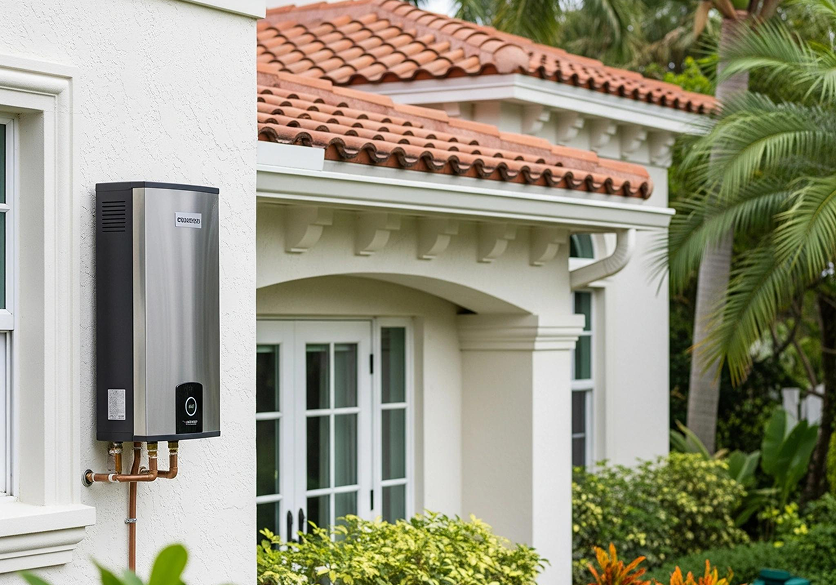
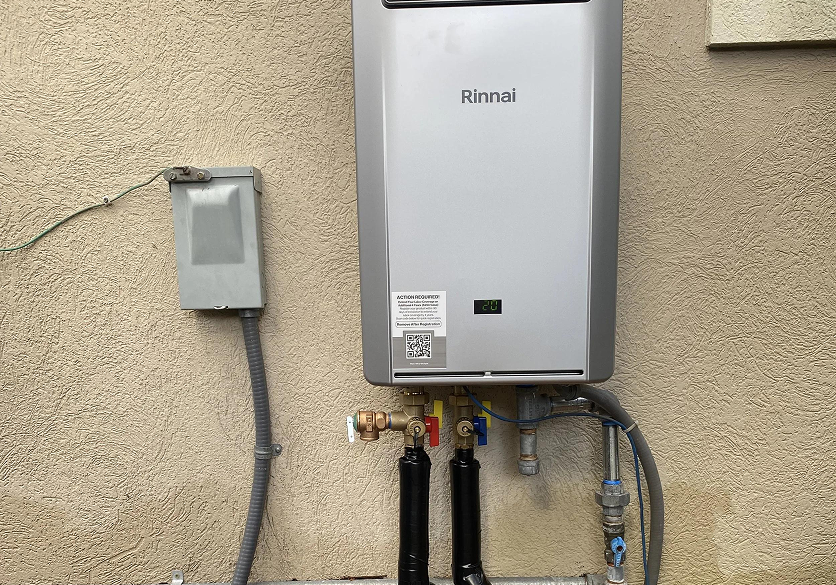
Tankless water heaters, also called on-demand or instant water heaters, heat water only while a tap is open, so the hot water supply never runs out. A flow sensor detects demand, a gas burner or electric element fires, and water heats as it passes through a heat exchanger instead of sitting in storage. Tankless water heaters cost $1,400 to $5,600 installed, with most projects landing between $2,600 and $2,800, and they last 15 to 20 or more years, roughly double a tank's life, because every component is replaceable and there is no tank to corrode. For Florida households, a gas tankless water heater is the strongest choice for big families: it carries the lowest operating cost of any water heater type we install, and it keeps up on high-demand mornings when a tank would run cold. Rinnai is the tankless brand we recommend first, and most of our tankless installations are Rinnai and Navien units.
Endless hot water does come with conditions: gas models need adequate gas supply and venting, and whole-house electric models draw heavy amperage. So is a tankless water heater worth the premium for your household? Tankless Water Heaters: Pros, Cons & Whether They're Worth It in Florida weighs every trade-off before you commit.

Heat Pump (Hybrid) Water Heaters
Heat pump water heaters, also called hybrid water heaters, pull heat out of the surrounding air and move it into the tank, using electricity to transfer heat rather than generate it. A compressor and evaporator coil sit on top of a storage tank, and backup electric elements step in during heavy demand, which is where the hybrid name comes from. Heat pump water heaters cost $2,000 to $8,000 installed, typically $3,200 to $4,700, and they last 10 to 15 years, with well-maintained units passing 20.
Florida is the climate this water heater type was made for. A heat pump water heater feeds on warm, humid air, and a Florida garage supplies both all year while the unit cools and dehumidifies the space as a side effect. Duke Energy Florida also rebates up to $800 on qualifying heat pump water heaters, which shortens the payback on the higher install price. Want the garage requirements, rebate details, and monthly savings math for St. Petersburg homes? Our guide to hybrid heat pump water heaters covers all three.
Electric Water Heaters
Electric water heaters heat water with immersed heating elements and run on the one fuel every Florida home already has: electricity. Two elements, upper and lower, each governed by its own thermostat, heat the tank without a flame, a flue, or a vent, which is why an electric water heater can be installed in closets and corners a gas model cannot occupy. Electricity is Florida's dominant water-heating fuel, and the electric tank is the most common and most economical water heater setup we see across Pinellas County. It is also the cheapest type to buy: a basic 40- to 50-gallon unit retails for $450 to $800, a standard installed replacement runs around $1,850, and no whole-house water heater type costs less upfront. Electric tank water heaters last 8 to 12 years, with elements and thermostats serviceable along the way.
For most St. Petersburg homes, an electric water heater is the default for a reason, and it is the type we stock the most: the 30- and 40-gallon electric tanks are our expected top sellers. Which electric configurations, sizes, and costs fit your home? Electric Water Heaters in Florida: Types, Costs & Installation goes model by model. The main thing an electric tank cannot match is recovery speed, and that is the gas water heater's territory.

Gas Water Heaters
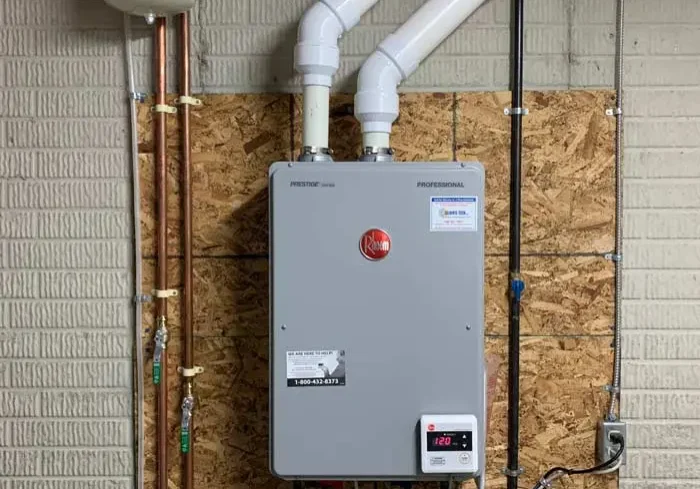
Gas water heaters burn natural gas or propane beneath the tank to heat water, and they recover faster than electric water heaters of the same size. A burner, a gas control valve, and a thermocouple or flame sensor do the work, so a gas water heater keeps producing hot water even during a power outage on standing-pilot models. Gas tank water heaters fall in the same installed range as other storage units and last the same 8 to 12 years; the gas tankless figures above apply when the fuel is paired with an on-demand unit. Every gas water heater must also exhaust its combustion gases outdoors, through a naturally drafting atmospheric vent, a fan-assisted power vent, or a sealed direct vent, and that venting route is often what moves the install price within the range.
For Florida homes, a gas water heater is the best type when a gas line already reaches the house: natural gas where mains run, propane where they do not. Availability varies block by block across the Tampa Bay area, so the fuel question is usually answered before the water heater question. Already have the line and weighing your options? Gas Water Heaters in Florida: Natural Gas & Propane Options compares both fuels in detail.
Solar Water Heaters
Solar water heaters capture sunlight with roof-mounted collectors and store the heated water in a tank fitted with a backup electric element for cloudy stretches and heavy use. Water or a heat-transfer fluid circulates through the collectors, carries the sun's heat down to the storage tank, and the backup element finishes whatever the sky does not. The Sunshine State economics are simple: Florida sun can cover most of a home's water heating energy, which is the entire financial case for the type. A solar water heater system lasts 15 to 20 years, and the parts age unevenly: collectors can outlast the system, while the storage tank ages like any standard tank. Installed cost for a full solar system runs $3,000 to $9,000 for most residential setups, and large active systems can exceed $10,000.
For Florida homeowners, solar is the right water heater type when the priority is cutting water heating energy use and the roof has the sun exposure to support it. We do not install solar water heaters; this section is here so the comparison covers every type. Could the Florida sun carry your home's water heating load? Solar Water Heaters in Florida: How They Work & What They Cost explains the collectors, the loops, and the numbers for readers weighing that path.

Point-of-Use & Mini-Tank Units
Point-of-use water heaters are compact units installed at a single fixture, so hot water arrives at that sink instantly instead of traveling from the main water heater across the house. The Ready Hot and InstaHot units we install serve kitchens and some bathroom sinks, delivering near-instant hot water for coffee, cooking, and washing up. These small water heaters last 2 to 3 years and are best treated as replaceable fixtures rather than long-term equipment. A point-of-use unit supplements a whole-house water heater; it does not replace one, which is a deliberate reason this water heater category gets a section here rather than a page of its own.
Which Type Is Best for Florida Homes?
The best water heater type for most Florida homes is the electric tank: electricity is the state's dominant water heating fuel, and the electric tank pairs the lowest upfront cost with the simplest installation. That is the recommendation we give most often on the phone, and it is why electric tanks fill most of our shelf space.
The verdict shifts with the house. A home with a garage is the strongest case for a heat pump water heater, because the garage supplies the warm air the unit feeds on and the electric bill drops accordingly. A home with a gas line and a big family points to a gas tankless water heater, the type with the lowest operating cost and no hot water limit for that household size. A budget-driven swap on a failed unit points straight back to the electric tank, the water heater type that restores hot water for the least money in the least time. Ready to move from categories to specific models? 7 Best Water Heaters for Florida Homes (2026) names our picks.
How Do the Types Compare on Cost and Lifespan?
The six water heater types separate cleanly on installed cost and lifespan, with tanks cheapest upfront and tankless units longest lived. The table below puts every type on this page side by side using the same figures discussed in each section.
| Water heater type | Installed cost | Lifespan | Best for |
|---|---|---|---|
| Tank (storage) water heater | $600–$2,500 | 8–12 years | Lowest-cost like-for-like swaps |
| Tankless water heater | $1,400–$5,600, typically $2,600–$2,800 | 15–20+ years | Big families, endless hot water |
| Heat pump water heater | $2,000–$8,000, typically $3,200–$4,700 | 10–15 years | Garage installs, lowest electric bills |
| Electric water heater | Around $1,850 standard replacement | 8–12 years | Most Florida homes, lowest upfront cost |
| Gas water heater | $600–$2,500 (tank models) | 8–12 years | Homes with a gas line, fast recovery |
| Solar water heater | $3,000–$9,000 | 15–20 years (system) | Sun-powered savings with electric backup |
This table shows that no single water heater type wins every column: the electric tank wins on price, the tankless on longevity, and the heat pump on operating cost, which is why the durability column deserves its own deeper look at water heater lifespans by type before you decide.

What Are the Alternatives to a Water Heater?
Boilers, combi boilers, and point-of-use units are the alternatives to a standard water heater. A boiler heats water for radiators or in-floor heating, and a combi boiler adds domestic hot water duty in one appliance, a setup far more common up north but still present in some older St. Petersburg buildings and commercial properties. We service boilers too, so an aging boiler system is not a reason to look outside Pinellas for help. Point-of-use units, covered above, round out the list as a supplement rather than a substitute. Looking at an unfamiliar unit and unsure which appliance you actually own? Boiler vs. Water Heater: What's the Difference? settles it in a few minutes.
Tankless water heaters last longest, at 15 to 20 or more years.
Talk Through Your Options
Florida Water Heater Pros helps you choose between water heater types for free: call, describe your home and your hot water habits, and we tell you which type and size fit, with an upfront quote in the same conversation. Estimates are free over the phone, pricing has no hidden fees, and we install every type on this page except solar across St. Petersburg. Call (727) 855-8080 or start online.
Fast Priority Response
Request an Immediate Quote
Units stocked & ready for same-day dispatch in Pinellas County.