
Water Heater Maintenance Checklist: What to Do & How Often
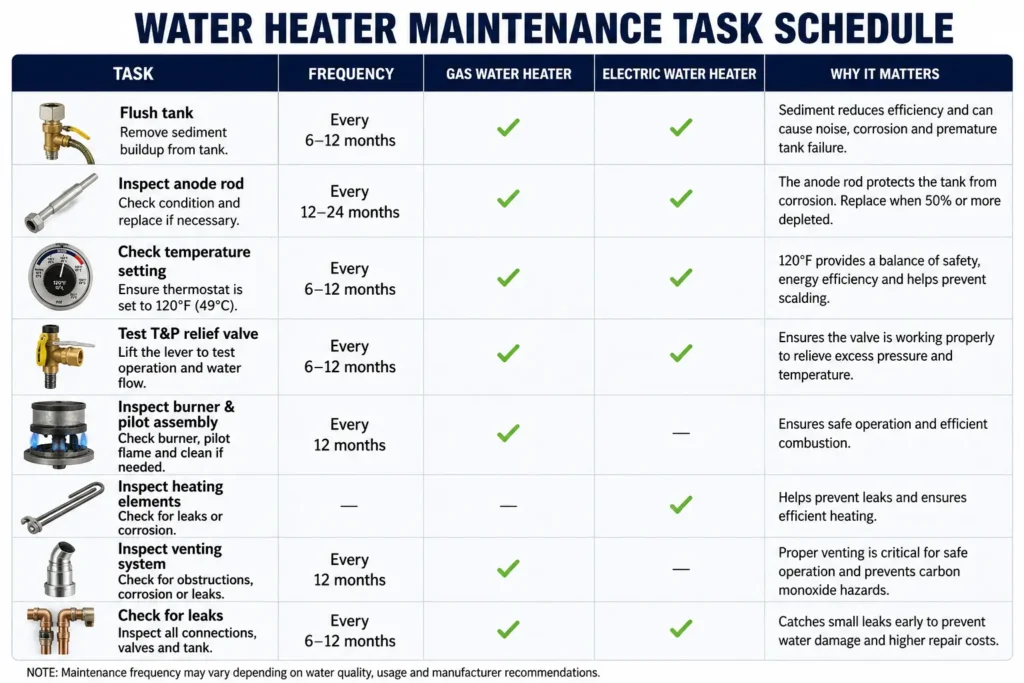
A water heater maintenance checklist should include monthly visual inspections, periodic temperature checks, annual professional maintenance, and equipment-specific tasks such as tank flushing, anode rod inspection, and tankless descaling. Following a consistent schedule can help identify leaks, sediment buildup, corrosion, and heating problems before they become more serious.
However, not every water heater requires the same maintenance.
A conventional electric storage tank has different components from a gas water heater. Tankless systems may require heat exchanger descaling, while heat pump water heaters have air filters and other components that need attention.
For homeowners in St. Petersburg, Clearwater, and throughout Pinellas County, water quality, humidity, equipment location, and household hot water demand can influence maintenance needs.
Florida homes may also experience storm-related power interruptions and flooding, making water heater inspections particularly important after severe weather.
This guide provides a practical maintenance schedule for gas, electric, tankless, and heat pump water heaters, including what homeowners can safely check and which tasks should be handled by qualified professionals.
Need professional water heater maintenance? Call Florida Water Heater Pros at 714-686-1649 to discuss your equipment or request a free phone estimate.
Water Heater Maintenance Checklist: Quick Reference
The following checklist provides a general maintenance schedule for residential water heaters.
Always follow your manufacturer’s instructions when they differ from these recommendations.
| Maintenance Task | Suggested Frequency | Who Should Perform It? |
|---|---|---|
| Check for visible leaks | Monthly | Homeowner |
| Inspect accessible pipes and fittings | Monthly | Homeowner |
| Listen for unusual noises | Monthly | Homeowner |
| Check for rust or corrosion | Monthly | Homeowner |
| Monitor hot water performance | Monthly | Homeowner |
| Check delivered water temperature | Every few months or when problems occur | Homeowner or professional |
| Inspect the area around the water heater | Monthly | Homeowner |
| Review the manufacturer’s maintenance requirements | Annually | Homeowner |
| Flush a storage tank, when recommended | According to manufacturer guidance; often annually | Professional recommended |
| Inspect the anode rod | According to manufacturer guidance | Qualified professional |
| Evaluate the temperature and pressure relief valve | According to manufacturer guidance | Qualified professional |
| Inspect gas burner and venting components | Annually or as specified | Qualified professional |
| Inspect electric heating components | During scheduled service or when problems occur | Qualified professional |
| Descale a tankless water heater | According to manufacturer and water quality | Qualified professional |
| Clean a heat pump water heater air filter | According to manufacturer guidance | Homeowner if accessible and permitted |
| Inspect after flooding or storm damage | Whenever damage is suspected | Qualified professional |
This schedule is a starting point rather than a universal requirement.
The correct maintenance frequency depends on the water heater model, manufacturer recommendations, water quality, and equipment condition.
Why Is Water Heater Maintenance Important?
Water heaters operate regularly to provide hot water for showers, laundry, cleaning, and other household needs.
Over time, mineral deposits may accumulate, protective components may deteriorate, and plumbing connections may develop leaks.
Routine maintenance helps identify these problems before they become more difficult to address.
Helps Identify Sediment Buildup
Storage tank water heaters can collect mineral particles and sediment.
Depending on water chemistry, these deposits may interfere with heat transfer and contribute to popping or rumbling noises.
Appropriate maintenance may help remove loose sediment.
Helps Detect Corrosion
Conventional steel storage tank water heaters rely on protective linings and anode rods to limit internal corrosion.
Anode rods gradually deteriorate as they provide corrosion protection.
Inspection can help determine whether replacement is necessary.
Helps Maintain Heating Performance
Heating components, thermostats, sensors, and other parts can develop problems over time.
Maintenance provides an opportunity to identify issues affecting normal operation.
Helps Reduce the Risk of Unexpected Leaks
Inspecting accessible connections and checking for moisture may reveal developing leaks.
However, maintenance cannot guarantee that a tank will never fail.
Supports Safe Equipment Operation
Gas water heaters require appropriate combustion and venting conditions.
Electric water heaters require properly functioning electrical components.
Temperature controls and safety devices also need to operate as intended.
Professional maintenance can help identify safety-related concerns.
Monthly Water Heater Maintenance Checklist
Monthly maintenance should focus on simple visual and operational checks that do not require opening the water heater, draining the tank, or handling electrical and gas components.
Most homeowners can complete these checks in a few minutes.
1. Check for Water Leaks
Look around the base of the water heater and accessible plumbing connections.
Watch for:
- Puddles or standing water
- Damp flooring
- Moisture around fittings
- Dripping valves
- Water stains on nearby surfaces
A small leak can become a larger problem if left unaddressed.
If you notice active leaking, arrange professional inspection.
Do not touch electrical equipment if water is present nearby.
2. Look for Rust and Corrosion
Inspect accessible pipes, fittings, and the exterior of the water heater.
Rust or discoloration may indicate moisture exposure or corrosion.
However, surface rust does not automatically mean the tank has failed.
A plumber can determine whether the problem involves an external connection or the storage tank itself.
3. Listen for Unusual Noises
Water heaters may produce some normal operating sounds.
However, new or increasingly loud popping, rumbling, banging, or hissing should be investigated.
Popping and rumbling may indicate sediment accumulation.
Other sounds may involve water pressure, heating components, or plumbing movement.
4. Monitor Hot Water Performance
Pay attention to whether the water heater provides a consistent supply of hot water.
Warning signs include:
- Hot water running out sooner than expected
- Unusually long heating times
- Water temperature fluctuations
- Intermittent hot water
- Unexpectedly cold water
These symptoms can have several causes, so avoid assuming that the thermostat needs adjustment.
5. Keep the Surrounding Area Clear
Maintain the clearances specified by the manufacturer.
Do not store flammable materials near gas water heaters.
Avoid blocking combustion air openings, ventilation paths, or service access.
For heat pump water heaters, airflow around the equipment is particularly important.
6. Check for Unusual Water Color or Odor
Notice whether hot water becomes rusty, cloudy, or develops an unusual smell.
Brown or reddish water may indicate sediment, corrosion, or a water supply problem.
A rotten egg odor may be associated with hydrogen sulfide or certain water chemistry conditions.
If the odor resembles gas near a gas appliance rather than coming specifically from running water, leave the area and contact the gas utility or emergency services from a safe location.
Every Few Months: Temperature and Performance Checks
Some maintenance tasks do not need to be performed monthly but should be reviewed periodically.
Check the Hot Water Temperature
Use a suitable thermometer to check the temperature delivered at a faucet.
For many households, approximately 120°F is a practical delivery temperature that helps reduce scalding risk.
However, the appropriate storage temperature may differ, especially in systems designed to manage Legionella risk using higher storage temperatures and thermostatic mixing valves.
If the water is unexpectedly hot or inconsistent, arrange professional evaluation.
Review Energy Use and Heating Performance
Unexpected changes in electricity or gas consumption may indicate an equipment problem, although household usage and utility rates can also affect bills.
Monitor whether the water heater takes longer to recover or struggles to meet normal demand.
If performance changes significantly, a professional inspection may be appropriate.
Inspect the Drain Pan if Installed
Some water heaters have a drain pan beneath the tank.
Check for standing water, visible damage, or signs that the drain is blocked.
Do not disconnect drain piping or attempt to modify the installation.
If water is collecting in the pan, identify the source before continuing normal operation.
Annual Water Heater Maintenance Checklist
Annual maintenance is a useful opportunity to review the water heater’s condition and complete manufacturer-recommended service.
Some equipment requires more frequent attention, while other tasks may be performed at longer intervals.
A qualified professional can determine which procedures apply to your system.
1. Inspect the Water Heater for Leaks and Corrosion
A professional may inspect accessible tank surfaces, fittings, valves, and plumbing connections.
Signs of corrosion or leakage can indicate developing problems.
The technician can determine whether repairs are appropriate or whether replacement should be considered.
2. Evaluate Sediment Accumulation
Storage tank water heaters may collect mineral deposits.
Depending on the manufacturer’s recommendations and equipment condition, flushing may help remove loose sediment.
However, flushing is not appropriate for every deteriorated or heavily corroded tank.
A professional should evaluate older equipment before draining it.
3. Inspect the Anode Rod
Many conventional steel storage tank water heaters use a sacrificial anode rod to reduce internal corrosion.
The rod gradually deteriorates over time.
Inspection may be recommended based on the manufacturer, water quality, and previous maintenance history.
If the rod meets the manufacturer’s replacement criteria, a compatible replacement may be necessary.
4. Evaluate the Temperature and Pressure Relief Valve
Many storage tank water heaters have a temperature and pressure relief valve, commonly called a T&P valve.
This safety device is designed to relieve excessive temperature or pressure under specified conditions.
A qualified professional should evaluate the valve according to manufacturer instructions and applicable requirements.
Do not plug, cap, or obstruct the relief valve discharge pipe.
Improper testing can release scalding water or cause an older valve to leak.
5. Check the Thermostat and Temperature Controls
The technician may evaluate whether the water heater maintains appropriate operating temperatures.
Unexpectedly high temperatures can create scalding hazards.
Low or inconsistent temperatures may indicate thermostat, heating, or control problems.
6. Inspect Accessible Plumbing Connections
Supply connections, fittings, and valves should be checked for visible leaks or deterioration.
A plumber may recommend repairs if components are damaged.
7. Review Equipment Operation
Professional maintenance may include checking heating performance, safety controls, and manufacturer-recommended operating conditions.
The exact procedure depends on the equipment.
Gas Water Heater Maintenance Checklist
Gas water heaters require attention to combustion, ignition, and venting systems.
These components should be inspected by qualified professionals.
Inspect the Burner and Ignition System
A technician may evaluate burner operation and ignition components.
Problems may include ignition failures, unusual burner operation, or malfunctioning controls.
Do not disassemble gas components or attempt to bypass safety devices.
Check Venting Components
Proper venting is essential for gas water heater safety.
A professional can inspect accessible vent connections and evaluate whether the system is operating as intended.
Blocked or damaged venting can create dangerous combustion conditions.
Evaluate Gas Connections
Gas piping and connections should be inspected when appropriate.
If you smell gas, leave the area immediately and contact your gas utility or emergency services from a safe location.
Do not attempt to locate a gas leak using a flame.
Review Manufacturer Maintenance Requirements
Different gas water heaters have different burner, air intake, venting, and control designs.
The maintenance schedule should follow the specific model’s instructions.
Electric Water Heater Maintenance Checklist
Electric storage tank water heaters use heating elements, thermostats, and electrical safety components.
Some maintenance tasks require access to energized equipment and should be performed only by qualified professionals.
Inspect Heating Performance
A professional may evaluate heating elements and thermostat operation when performance problems occur.
A failed heating element can reduce available hot water.
Check Electrical Components
Accessible electrical connections and controls may require inspection according to manufacturer guidance.
Homeowners should not remove electrical access covers or touch internal wiring.
Evaluate Sediment Buildup
Mineral deposits may collect around heating elements and at the bottom of the tank.
Appropriate flushing may help remove loose sediment.
Inspect the Anode Rod
Many electric storage tank water heaters use sacrificial anode rods.
Inspection and replacement should follow manufacturer requirements.
Tankless Water Heater Maintenance Checklist
Tankless water heaters heat water as it flows through the equipment.
They do not store large volumes of hot water in conventional storage tanks, but they still require maintenance.
1. Check for Error Codes
Many tankless systems have digital displays or diagnostic indicators.
If an error code appears, consult the manufacturer’s documentation.
Repeated errors should be evaluated by a qualified professional.
2. Monitor Hot Water Performance
Watch for temperature fluctuations, reduced flow, or inconsistent heating.
These symptoms may indicate mineral scale, flow restrictions, ignition problems, or other issues.
3. Inspect Accessible Water Connections
Check for visible leaks or corrosion around accessible plumbing connections.
4. Descale the Heat Exchanger When Recommended
Mineral scale can accumulate inside tankless heat exchangers.
Depending on water quality and manufacturer requirements, periodic descaling may be necessary.
The procedure typically involves manufacturer-approved equipment and cleaning solutions.
Professional service is recommended.
5. Check Water Filters and Screens
Some tankless models have inlet filters or screens that require periodic cleaning.
Follow the manufacturer’s instructions.
Do not remove components while the equipment is pressurized or hot.
6. Inspect Gas and Venting Components
Gas tankless water heaters require appropriate combustion and venting conditions.
These components should be evaluated by qualified professionals.
Heat Pump Water Heater Maintenance Checklist
Heat pump water heaters use refrigeration technology to transfer heat from surrounding air into stored water.
They also have components that differ from conventional electric storage tank models.
Check the Air Filter
Many heat pump water heaters have air filters that require periodic cleaning.
The frequency depends on the manufacturer and operating environment.
Follow the equipment instructions.
Maintain Proper Airflow
Heat pump water heaters require adequate airflow.
Avoid blocking air intake or exhaust openings.
Storage items should not interfere with required clearances.
Inspect Condensate Drainage
Heat pump water heaters may produce condensate during normal operation.
Check accessible condensate drainage components for signs of blockage or leakage.
If water is collecting where it should not, arrange professional service.
Monitor Operating Modes
Some heat pump water heaters have efficiency, hybrid, electric, or other operating modes.
Review the manufacturer’s instructions to understand how these settings affect operation.
Inspect the Storage Tank and Anode System
Many heat pump water heaters use steel storage tanks with corrosion-protection components.
The appropriate inspection procedure depends on the model.
Water Heater Maintenance Schedule by Equipment Type
Different water heater systems have different maintenance needs.
| Maintenance Task | Gas Tank | Electric Tank | Tankless | Heat Pump |
|---|---|---|---|---|
| Visual leak inspection | Monthly | Monthly | Monthly | Monthly |
| Monitor hot water performance | Monthly | Monthly | Monthly | Monthly |
| Check delivered temperature | Periodically | Periodically | Periodically | Periodically |
| Sediment flushing | If recommended | If recommended | Not conventional tank flushing | If recommended |
| Anode rod inspection | Model-dependent | Model-dependent | Usually not applicable | Model-dependent |
| Burner inspection | Yes | No | Gas models | No |
| Venting inspection | Yes | No | Gas models | No |
| Heat exchanger descaling | Not typically | Not typically | If recommended | Not conventional tankless descaling |
| Air filter cleaning | Model-dependent | Usually not applicable | Model-dependent | If equipped |
| Condensate drainage check | Condensing models | Usually not applicable | Condensing models | If equipped |
| Professional maintenance review | Per manufacturer | Per manufacturer | Per manufacturer | Per manufacturer |
Note: This table is a general guide. Manufacturer instructions determine the appropriate procedures and intervals for each model.
How Often Should You Flush a Water Heater?
Many storage tank water heater manufacturers recommend periodic flushing to remove loose sediment.
Annual flushing is commonly discussed as a maintenance interval, but it is not required for every model.
The appropriate schedule depends on:
- Manufacturer instructions
- Water hardness
- Sediment accumulation
- Tank condition
- Household hot water usage
- Previous maintenance history
Does Hard Water Require More Frequent Flushing?
Hard water contains elevated levels of dissolved calcium and magnesium.
These minerals can contribute to scale formation during heating.
Homes with higher mineral content may experience faster deposit accumulation.
However, water hardness varies throughout Pinellas County, so homeowners should not assume every property has the same conditions.
Water testing can help determine whether hardness is a concern.
What if the Water Heater Has Never Been Flushed?
A water heater that has never been flushed should be evaluated before draining, particularly if it is older or shows signs of corrosion.
Heavy sediment, hardened deposits, or deteriorated drain valves can complicate maintenance.
A professional may recommend flushing, additional inspection, or another solution depending on the equipment’s condition.
How Often Should You Replace a Water Heater Anode Rod?
There is no universal replacement interval for every anode rod.
Sacrificial anodes deteriorate at different rates depending on water chemistry, tank design, and operating conditions.
The manufacturer may specify inspection intervals and replacement criteria.
Signs That an Anode Rod May Need Inspection
Possible warning signs include:
- Rusty hot water
- Unusual sulfur-related odors
- Visible corrosion around the equipment
- An extended period without anode inspection
- Water conditions associated with increased corrosion
These signs do not prove that the anode has failed.
A qualified professional can inspect the component when the water heater design permits.
How Often Should You Service a Tankless Water Heater?
Tankless maintenance frequency depends on the manufacturer, water hardness, and operating conditions.
Some systems require periodic descaling to remove mineral deposits.
Others may need filter cleaning, combustion inspection, or additional manufacturer-specified procedures.
Homes with elevated mineral content may require closer attention to scale accumulation.
A professional can recommend a maintenance schedule based on the model and water conditions.
Does Water Heater Maintenance Extend Its Lifespan?
Appropriate maintenance may help reduce certain problems associated with sediment, corrosion, and component deterioration.
However, maintenance cannot guarantee that a water heater will operate for a specific number of years.
Equipment longevity depends on several factors:
- Water heater design
- Water quality
- Installation conditions
- Household usage
- Operating temperature
- Corrosion protection
- Maintenance history
- Component condition
A well-maintained water heater can still develop unexpected problems.
Likewise, a neglected unit may continue operating without obvious symptoms until a failure occurs.
The purpose of maintenance is to support safe, reliable operation and identify developing issues.
What Happens if You Skip Water Heater Maintenance?
Skipping maintenance does not always cause immediate equipment failure.
However, certain problems may become more difficult to identify or correct over time.
Sediment May Accumulate
Mineral deposits may build up inside storage tanks.
This can contribute to noise and reduced heating performance.
Anode Rods May Become Depleted
If an anode rod is not inspected when recommended, it may become significantly depleted without the homeowner realizing it.
Small Leaks May Go Unnoticed
A slow leak can cause moisture damage before it becomes obvious.
Heating Problems May Develop
Worn or malfunctioning components can affect hot water performance.
Safety-Related Issues May Remain Undetected
Gas venting problems, malfunctioning controls, and other equipment issues may require professional attention.
Regular inspection provides opportunities to identify these conditions.
Water Heater Maintenance Before Hurricane Season
Florida homeowners should consider water heater safety when preparing for severe weather.
Hurricanes and tropical storms can cause flooding, power interruptions, and plumbing damage.
Know Where the Shutoff Controls Are Located
Identify the water heater’s electrical breaker or gas control and the appropriate water supply valve.
Follow manufacturer and utility guidance when shutdown is necessary.
Check for Existing Leaks
Inspect the water heater area for visible moisture or damaged connections before storm season.
Keep the Area Accessible
Avoid storing items that block access to the equipment or shutoff controls.
Do Not Restart Flood-Damaged Equipment
A water heater exposed to floodwater should not be restarted until a qualified professional has evaluated it.
Floodwater can damage gas controls, electrical components, insulation, and other safety-related parts.
Even if the exterior appears dry, internal damage may remain.
Inspect After Severe Weather
If a storm causes water intrusion, electrical damage, or plumbing problems, arrange professional evaluation before returning affected equipment to service.
DIY Water Heater Maintenance vs. Professional Service
Some maintenance checks are suitable for homeowners.
Others involve electrical hazards, gas systems, hot water, pressurized plumbing, or safety components.
Tasks Homeowners Can Usually Perform
Homeowners can generally:
- Look for visible leaks.
- Monitor hot water performance.
- Listen for unusual noises.
- Check for exterior corrosion.
- Keep required clearances open.
- Review manufacturer instructions.
- Clean accessible heat pump air filters when permitted.
These checks should not require opening electrical compartments or modifying equipment.
Tasks Best Handled by Professionals
Professional service is recommended for:
- Anode rod removal and replacement
- Temperature and pressure relief valve evaluation
- Gas burner and venting inspection
- Electrical component testing
- Tank draining or flushing when equipment condition is uncertain
- Tankless heat exchanger descaling
- Repairs involving valves, fittings, or controls
- Inspection after flooding or storm damage
A qualified plumber can determine which procedures are appropriate for the equipment.
How Much Does Water Heater Maintenance Cost in Florida?
Water heater maintenance costs depend on the type of equipment, service requirements, accessibility, and condition.
A routine inspection may involve different work from a maintenance visit requiring flushing, descaling, or component replacement.
Factors affecting pricing include:
- Water heater type and model
- Tank capacity
- Maintenance history
- Sediment or scale accumulation
- Equipment accessibility
- Condition of valves and fittings
- Additional repairs, if needed
If worn or damaged parts are discovered, the technician may recommend additional work.
Homeowners should request an explanation of the recommended service and pricing before authorizing repairs.
Florida Water Heater Pros provides free phone estimates and upfront pricing based on the available project information.
Final pricing depends on the equipment and work required.
When Should You Schedule Professional Water Heater Maintenance?
Professional maintenance may be appropriate when the manufacturer recommends service, the equipment has not been inspected for an extended period, or operating problems develop.
Contact a qualified plumber if:
- Your water heater makes unusual noises.
- Hot water runs out sooner than expected.
- Water temperatures fluctuate.
- Rust or corrosion appears.
- The unit develops a leak.
- Hot water becomes discolored.
- The equipment displays error codes.
- The water heater has an uncertain maintenance history.
- You need anode rod inspection or replacement.
- Tankless descaling is due.
Florida Water Heater Pros provides water heater maintenance services in St. Petersburg, FL for homeowners and businesses throughout Clearwater and Pinellas County.
Our licensed and insured plumbing team can inspect your equipment, evaluate maintenance concerns, and recommend appropriate service based on the manufacturer’s requirements and the system’s condition.
Printable Water Heater Maintenance Checklist
Use this checklist as a simple reference throughout the year.
Monthly
- Check for visible leaks around the tank and connections.
- Look for rust or corrosion.
- Listen for unusual noises.
- Monitor hot water performance.
- Check for unusual water color or odor.
- Keep the surrounding area clear.
- Check accessible drain pans for standing water.
Every Few Months
- Check delivered hot water temperature.
- Review changes in hot water performance.
- Inspect accessible plumbing connections.
- Review unusual energy consumption changes.
- Clean accessible heat pump filters when recommended.
Annually or According to Manufacturer Guidance
- Review the water heater maintenance schedule.
- Arrange professional inspection when recommended.
- Evaluate sediment flushing requirements.
- Review anode rod inspection requirements.
- Evaluate safety valves and temperature controls.
- Inspect gas burner and venting components where applicable.
- Review tankless descaling requirements.
- Inspect heat pump condensate drainage where applicable.
- Address any identified leaks or operating problems.
After Severe Weather or Flooding
- Check the area for visible damage.
- Avoid operating equipment exposed to floodwater.
- Arrange professional inspection when damage is suspected.
- Follow manufacturer and utility guidance before restarting.
Frequently Asked Questions About Water Heater Maintenance
What maintenance does a water heater need?
Maintenance may include visual inspections, sediment management, anode rod inspection, temperature checks, and evaluation of heating and safety components. The exact requirements depend on the model.
How often should you maintain a water heater?
Monthly visual checks are useful for homeowners. Professional maintenance should follow the manufacturer’s recommended schedule, often including an annual review for many systems.
Should you flush your water heater every year?
Annual flushing is commonly recommended for some storage tank systems, but the correct interval depends on manufacturer instructions, water quality, and equipment condition.
What happens if you never flush your water heater?
Sediment may accumulate inside the tank and contribute to popping noises, reduced heating performance, or other problems.
How often should an anode rod be replaced?
Replacement depends on the manufacturer’s criteria and the rod’s condition. Water chemistry can affect how quickly the component deteriorates.
Do electric water heaters need maintenance?
Yes. Electric water heaters may require sediment management, anode rod inspection, thermostat evaluation, and heating element troubleshooting.
Do gas water heaters need annual maintenance?
Gas water heaters require manufacturer-recommended maintenance, including appropriate attention to combustion and venting components. A professional can determine the correct schedule.
Do tankless water heaters need maintenance?
Yes. Tankless systems may require descaling, filter cleaning, and inspection of heating and control components.
Do heat pump water heaters need maintenance?
Yes. Heat pump water heaters may require air filter cleaning, condensate drainage checks, storage tank maintenance, and other manufacturer-specified procedures.
Can water heater maintenance lower energy bills?
Appropriate maintenance may help maintain heating performance, particularly when sediment or scale is affecting the system. Actual energy savings depend on equipment condition and household usage.
Is water heater maintenance necessary in Florida?
Yes. Water heaters in Florida can experience sediment accumulation, corrosion, leaks, and component deterioration. Maintenance needs depend on the equipment and water quality.
Can I perform water heater maintenance myself?
Homeowners can usually perform basic visual checks. Tasks involving electrical components, gas systems, pressurized plumbing, or safety devices are best handled by qualified professionals.
Does Florida Water Heater Pros provide maintenance in Clearwater?
Florida Water Heater Pros provides water heater inspections, maintenance, repairs, and replacements throughout Clearwater, St. Petersburg, and Pinellas County.
Schedule Professional Water Heater Maintenance in Pinellas County
A consistent water heater maintenance schedule can help identify leaks, sediment buildup, corrosion, and equipment problems before they become more serious.
Monthly visual checks are a useful starting point, while professional maintenance can address tasks requiring specialized tools and experience.
Florida Water Heater Pros provides water heater inspections, maintenance, repairs, and replacements throughout St. Petersburg, Clearwater, Largo, Dunedin, Palm Harbor, Safety Harbor, Pinellas Park, and surrounding Pinellas County communities.
Our licensed and insured plumbing team works with residential and commercial electric, natural gas, propane, tankless, and heat pump water heaters.
Whether your equipment needs routine maintenance, sediment flushing, anode rod inspection, or troubleshooting, we can evaluate the system and explain the recommended next steps.
Request a Water Heater Maintenance Estimate
Keep your water heater maintenance on schedule and address developing problems before they become more difficult to repair.
Call Florida Water Heater Pros at 714-686-1649 to discuss your water heater maintenance needs or get a free phone estimate.
We serve homeowners and businesses throughout St. Petersburg, Clearwater, and Pinellas County, Florida.
Florida Water Heater Pros
Phone: 714-686-1649
Service Area: St. Petersburg, Clearwater, and Pinellas County, FL
Florida Plumbing License: CFC1432953
Licensed and Insured
Registered DBA: Pop Leland Plumbing
