How to Turn a Water Heater On or Off (Gas & Electric)
To turn off a water heater, use the shutdown procedure specified by its manufacturer. Electric water heaters are typically switched off at their dedicated circuit breaker or disconnect, while gas water heaters use a gas control with approved operating and shutdown settings. To turn the unit back on, confirm that the tank is full of water, check for leaks, and follow the manufacturer’s startup instructions.
Knowing how to shut down a water heater is useful when performing maintenance, preparing for a vacation, responding to a leak, or dealing with equipment problems. However, turning off a gas water heater is different from turning off an electric model, and using the wrong procedure can damage equipment or create safety hazards.
For homeowners in St. Petersburg, Clearwater, and throughout Pinellas County, understanding water heater shutoff controls is particularly helpful during hurricane season. Extended travel, plumbing repairs, and storm-related power interruptions can also affect how water heaters should be managed.
This guide explains how to turn gas and electric water heaters on and off, when to use vacation mode, how to identify water shutoff valves, and what to check before restarting the system.
Need help shutting down or restarting your water heater? Call Florida Water Heater Pros at 714-686-1649 for professional assistance.
How Do You Turn Off a Water Heater?
The correct shutdown procedure depends on the type of water heater and why it needs to be turned off.
For a conventional electric water heater, shutting down usually involves disconnecting electrical power at the appropriate breaker or disconnect.
For a gas water heater, the process may involve selecting an approved operating mode or turning the gas control to OFF.
If the water heater is leaking, damaged, or being prepared for maintenance, the water supply may also need to be shut off.
Important: Turning off the heating source and shutting off the water supply are two different actions.
The electrical breaker or gas control stops heating. The water supply valve controls incoming water.
Some situations require both, but the correct sequence depends on the equipment and circumstances.
When Should You Turn Off Your Water Heater?
Common reasons include:
- Preparing for plumbing or water heater maintenance
- Responding to a water heater leak
- Replacing or repairing equipment
- Preparing for an extended vacation
- Addressing unusual water heater operation
- Following manufacturer shutdown instructions
- Responding to certain storm-related emergencies
Not every situation requires a complete shutdown.
For example, a short vacation may be better handled through an approved vacation mode rather than fully turning off the system.
How to Turn Off an Electric Water Heater
To turn off a conventional electric water heater, disconnect its electrical power using the dedicated breaker or disconnect identified for the equipment.
Electric storage tank water heaters use heating elements that must remain submerged during operation.
If the tank is drained while electrical power remains on, the heating elements can overheat and become damaged.
Step 1: Locate the Electrical Panel
Find the home’s main electrical panel or the disconnect serving the water heater.
Look for a circuit breaker labeled Water Heater or another appropriate designation.
Breaker labels are not always accurate, particularly in homes that have undergone electrical modifications.
If you cannot confidently identify the correct circuit, contact a qualified professional.
Step 2: Switch Off the Water Heater Breaker
Move the identified breaker to the OFF position.
Do not remove electrical covers or touch exposed wiring.
If the breaker is damaged, will not operate normally, or shows signs of overheating, contact a qualified electrician.
Step 3: Confirm the Equipment Is Shut Down
Follow the manufacturer’s instructions for confirming that the water heater is no longer heating.
If the system has a display or status indicator, it may turn off when power is disconnected.
However, a dark display does not prove that internal electrical components are safe to touch.
Step 4: Shut Off the Water Supply if Necessary
If you are preparing for maintenance, draining, or responding to a leak, the cold water supply may need to be closed.
The valve is commonly located on the cold water pipe entering the top or side of the water heater.
Do not force a stuck or damaged valve.
Step 5: Leave the Water Heater Off Until It Is Safe to Restart
If the unit was shut down because of a leak, flooding, electrical damage, or another malfunction, have it inspected before restoring power.
Do not restart damaged equipment simply because the immediate problem appears to have stopped.
How to Turn On an Electric Water Heater
Before turning on an electric storage tank water heater, confirm that the tank is completely filled with water.
Restoring power to an empty or partially filled tank can damage the heating elements.
Step 1: Check for Leaks or Damage
Inspect accessible plumbing connections and the surrounding area for visible moisture, corrosion, or damage.
Do not touch electrical components or remove access covers.
If the water heater has been flooded or exposed to stormwater, do not restart it until a qualified professional has evaluated the equipment.
Step 2: Confirm the Water Supply Is Open
If the cold water supply valve was closed, reopen it according to the manufacturer’s instructions.
Check accessible connections for leaks.
Step 3: Make Sure the Tank Is Full
Follow the manufacturer’s filling procedure.
This commonly includes opening an appropriate hot water faucet and allowing air to escape until a steady flow of water is established.
The absence of air at one faucet does not always prove that every installation has been filled correctly, so follow the equipment instructions.
Step 4: Restore Electrical Power
Once the tank is confirmed full and the system is safe to operate, restore power using the appropriate breaker or disconnect.
Step 5: Allow the Water to Heat
A storage tank water heater needs time to heat its water after startup.
The time required depends on tank capacity, incoming water temperature, heating elements, and equipment condition.
If the unit does not produce hot water or the breaker trips, stop troubleshooting and contact a professional.
How to Turn Off a Gas Water Heater
Gas water heaters use controls that differ from electric models.
Many conventional gas storage tank water heaters have a gas control valve with operating positions such as ON, PILOT, and OFF.
Other models use electronic ignition and digital controls.
Always follow the shutdown instructions printed on the water heater or provided by the manufacturer.
Step 1: Locate the Gas Control
The gas control is commonly positioned near the lower portion of a conventional gas storage tank water heater.
Depending on the model, it may include a temperature dial, operating selector, ignition controls, or a digital interface.
Do not confuse the temperature setting with the gas shutoff control.
Step 2: Identify the Correct Shutdown Mode
Some models have an OFF position that stops normal gas delivery through the control.
Other models offer a vacation or standby setting that reduces heating without completely shutting down the system.
Choose the appropriate mode based on the manufacturer’s instructions and reason for shutdown.
Step 3: Turn the Control to the Approved Position
Follow the manufacturer’s instructions for operating the control.
Do not force a knob, bypass a safety device, or modify the gas valve.
If the control is damaged or does not operate normally, contact a qualified professional.
Step 4: Shut Off the Gas Supply Only When Appropriate
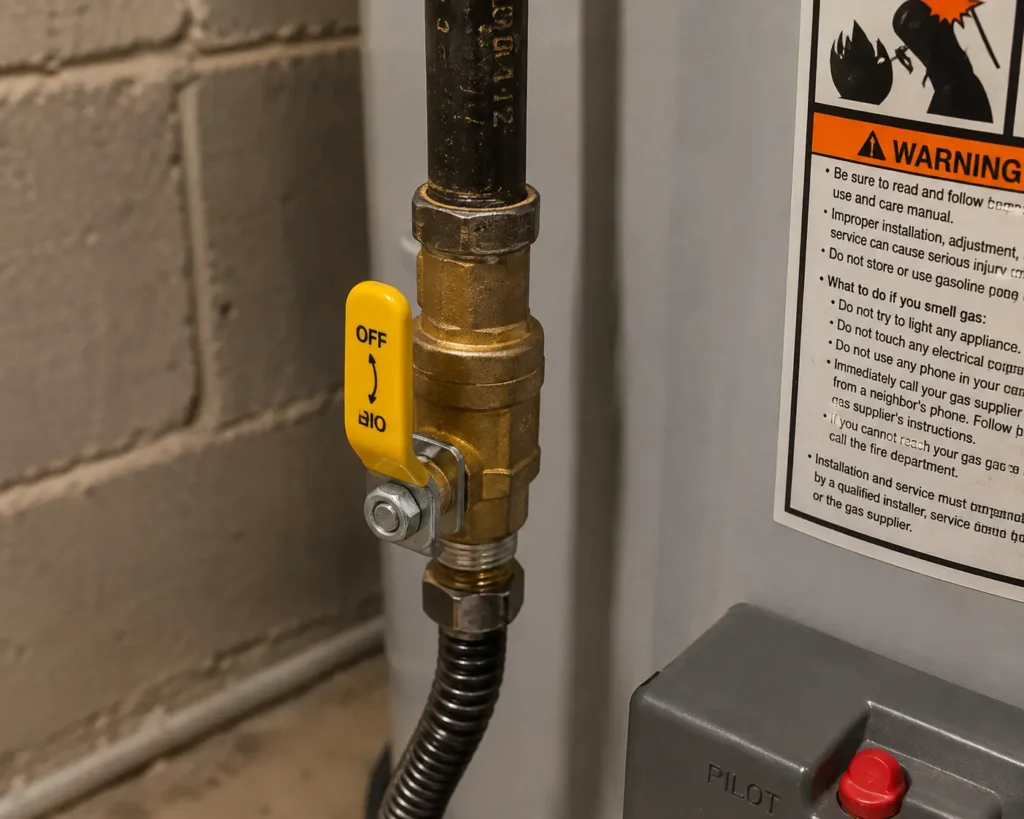
Certain maintenance or emergency procedures may require closing the manual gas shutoff valve.
This valve is separate from the water heater’s temperature or operating control.
If you are unsure which valve controls the gas supply, do not attempt to operate unfamiliar piping or fittings.
Contact a qualified professional for assistance.
Step 5: Check for Unsafe Conditions
If you smell gas, hear suspected gas escaping, or notice damaged gas piping, leave the area immediately.
Contact your gas utility or emergency services from a safe location.
Do not operate electrical switches, use ignition sources, or attempt to restart the water heater.
How to Turn On a Gas Water Heater
The startup procedure depends on whether the gas water heater uses a standing pilot light or electronic ignition.
Older models may require a manufacturer-approved pilot-light procedure.
Newer models may ignite automatically.
Step 1: Inspect the Equipment
Check for visible damage, moisture, corrosion, or leaks.
Do not restart a water heater that has been flooded, exposed to stormwater, or damaged.
Step 2: Confirm the Tank Is Full
If the water supply was shut off or the tank was drained, follow the manufacturer’s filling procedure before restarting.
Step 3: Review the Manufacturer’s Lighting Instructions
Read the instructions on the water heater.
If the unit has a standing pilot, the instructions may include turning the control to OFF, waiting the required period, and using the approved ignition procedure.
If the system uses electronic ignition, follow its specific startup instructions.
Step 4: Restore Gas Operation as Directed
Use only the manufacturer’s approved procedure.
Do not attempt to bypass ignition controls or manually light a water heater that is not designed for manual lighting.
Step 5: Confirm Normal Operation
Check the status indicator, if equipped, and confirm that the system begins heating normally.
If the pilot will not stay lit, ignition repeatedly fails, or the unit displays an error, stop attempting to restart it.
A qualified plumber can inspect the ignition system and gas controls.
Gas vs. Electric Water Heater Shutoff: What’s Different?
Gas and electric water heaters require different shutdown and startup procedures.
| Feature | Electric Water Heater | Gas Water Heater |
|---|---|---|
| Heating source | Electricity | Natural gas or propane |
| Main shutdown control | Dedicated breaker or disconnect | Manufacturer-approved gas control |
| Startup requirements | Full tank before restoring power | Full tank and approved ignition procedure |
| Main safety concern | Electrical hazards and dry firing | Gas leaks and combustion safety |
| Vacation settings | Available on some models | Available on some models |
| Professional assistance | Electrical or equipment problems | Gas control or ignition problems |
Both types require proper water supply management when draining, repairing, or replacing the equipment.
Neither should be restarted after flooding or serious damage without professional evaluation.
Where Is the Water Heater Shutoff Valve?
Most conventional storage tank water heaters have a cold water supply connection near the top of the tank.
A shutoff valve may be installed on the incoming cold water line.
The valve allows water entering the tank to be stopped for maintenance or certain repairs.
How Do You Identify the Cold Water Shutoff Valve?
Look for the cold water pipe connected to the water heater.
Depending on the installation, the valve may be a lever-style ball valve or a round-handled valve.
The exact location varies.
Some installations have additional valves, recirculation piping, or mixing systems.
If the plumbing arrangement is unfamiliar, ask a plumber to identify the correct shutoff.
Which Way Do You Turn a Water Heater Shutoff Valve?
For a typical quarter-turn ball valve, the handle is generally parallel to the pipe when open and perpendicular when closed.
Other valve types operate differently.
Do not force a valve that is stuck, corroded, or difficult to turn.
Forcing an old valve can damage the plumbing and cause leakage.
Does Turning Off the Water Heater Stop Water Flow?
No.
Turning off the heating source does not necessarily stop water entering the tank or flowing through the plumbing system.
If a water heater is leaking, controlling the water supply may be necessary to limit further damage.
If you cannot safely isolate the leak, contact a qualified plumber.
Should You Turn Off Your Water Heater When Going on Vacation?
For a short trip, completely shutting down a functioning water heater is not always necessary. Some models have a vacation mode designed to reduce energy use while the household is away.
For extended travel, the appropriate setting depends on the water heater type, manufacturer recommendations, plumbing system, and whether the home will remain occupied.
What Is Water Heater Vacation Mode?
Vacation mode is an operating setting available on certain gas, electric, tankless, and heat pump water heaters.
Its purpose is generally to reduce unnecessary heating while the home is unoccupied.
However, vacation mode does not operate identically on every model.
Some systems maintain a reduced storage temperature, while others use different control strategies.
Consult the manufacturer’s instructions before activating it.
Should You Turn Off an Electric Water Heater for Vacation?
Some homeowners choose to turn off electric storage tank water heaters during extended absences.
However, this may not be appropriate for every system.
If the water heater remains filled and the water becomes stagnant, water quality and bacterial growth considerations may affect the recommended return-to-service procedure.
A qualified professional can advise on the appropriate approach for longer vacancies.
Should You Turn Off a Gas Water Heater for Vacation?
If the water heater has a manufacturer-approved vacation mode, that setting may be suitable for certain absences.
Do not assume that turning the gas control to PILOT is the same as using a dedicated vacation setting.
The correct procedure depends on the model.
What About Tankless Water Heaters?
Many tankless systems have electronic controls that allow users to change operating settings or place the unit in standby.
Some equipment includes freeze protection or other functions that depend on electrical power.
Follow the manufacturer’s instructions before disconnecting power or changing operating modes.
How Long Can a Water Heater Stay Off?
A water heater can remain shut down for different periods depending on the equipment and circumstances.
However, an extended shutdown may require additional precautions before the system is returned to service.
Water that remains stagnant in a tank or plumbing system can create water quality concerns.
This is particularly important for vacation properties, seasonal homes, and buildings that remain unoccupied for long periods.
Can You Leave a Water Heater Off for a Week?
For many systems, a temporary shutdown may be possible when performed according to manufacturer instructions.
However, water quality, system design, and household conditions should be considered.
A week-long shutdown is not automatically appropriate for every installation.
Can You Leave a Water Heater Off for a Month?
Extended shutdowns require more planning.
A qualified plumber may recommend specific steps for water supply management, equipment shutdown, and return to service.
The appropriate procedure depends on the plumbing system and manufacturer requirements.
Can Stagnant Water Become a Problem?
Yes.
When water remains unused for extended periods, disinfectant residuals may decline and microorganisms may grow under suitable conditions.
Water temperature, plumbing design, and stagnation can influence these risks.
Simply reheating the tank does not guarantee that the entire plumbing system is free from water quality concerns.
How to Turn a Water Heater Back On After Vacation
Restarting a water heater after a vacation depends on how it was shut down and how long the home remained unoccupied.
Step 1: Inspect the Area
Look for visible leaks, water damage, or unusual equipment conditions.
Do not restart damaged equipment.
Step 2: Check the Water Supply
If the water supply was closed, follow the appropriate procedure for restoring it.
Inspect accessible plumbing connections for leaks.
Step 3: Confirm the Tank Is Full
For storage tank systems, confirm that the tank is properly filled before restoring heating.
This is especially important for electric water heaters.
Step 4: Consider Water Stagnation
If the home has been vacant for an extended period, follow appropriate water system return-to-service guidance.
Depending on the situation, professional evaluation or additional water management steps may be needed.
Step 5: Restore Normal Operation
Follow the manufacturer’s startup instructions.
For electric models, restore power only after confirming the tank is full.
For gas models, use the approved operating or ignition procedure.
Step 6: Check Hot Water Performance
Allow the system to reach its normal operating condition.
If hot water is unavailable, temperatures fluctuate, or the equipment displays an error, contact a qualified professional.
Should You Turn Off Your Water Heater During a Hurricane?
Florida homeowners should understand their water heater’s shutoff controls before hurricane season.
Storms can cause power outages, flooding, plumbing damage, and interruptions to utility services.
However, shutting down a water heater is not automatically necessary for every storm.
The appropriate action depends on the equipment, manufacturer guidance, utility conditions, and local emergency instructions.
Before a Hurricane
Consider identifying the water heater’s electrical breaker, gas control, and water supply valve.
Keep the manufacturer’s operating instructions accessible.
If local authorities or utility providers issue shutdown instructions, follow their guidance.
Do not wait until floodwater reaches electrical or gas equipment before trying to operate nearby controls.
During a Power Outage
An electric water heater cannot actively heat water without electrical power.
Gas water heaters may operate differently depending on whether they require electricity for ignition, controls, or ventilation.
Do not assume every gas water heater will function during a power outage.
Avoid attempting improvised electrical connections or bypassing safety systems.
After Flooding
Do not restart a water heater that has been submerged or exposed to floodwater.
Floodwater can damage electrical components, gas controls, insulation, and other safety-related parts.
Even if the exterior appears dry, internal damage may remain.
Have the equipment evaluated by a qualified professional before attempting to restore operation.
What Should You Do if Your Water Heater Is Leaking?
If you notice water leaking around the heater, determine whether the source can be identified without touching electrical components or entering an unsafe area.
Leaks may originate from plumbing connections, valves, or the tank itself.
Step 1: Avoid Electrical Hazards
If water is near electrical equipment, do not touch the water heater, breaker, or surrounding electrical components.
Contact a qualified professional or utility provider for assistance.
Step 2: Shut Down the Heating Source if Safe
Follow the manufacturer’s approved shutdown procedure only if the controls can be accessed safely.
Step 3: Control the Water Supply
If safe and appropriate, close the cold water supply valve serving the water heater.
If the valve is inaccessible or damaged, professional assistance may be necessary.
Step 4: Arrange Professional Inspection
A plumber can determine whether the leak originates from a repairable connection or a damaged tank.
Do not restart the water heater until the cause has been addressed and the equipment is safe to operate.
Should You Turn Off a Water Heater Before Draining or Flushing?
Yes. Water heater draining and flushing require the equipment to be placed in the appropriate maintenance condition according to manufacturer instructions.
Electric water heaters must not operate with exposed heating elements.
Gas water heaters also require proper shutdown or maintenance settings.
Water inside the tank may be hot enough to cause burns.
If you are unfamiliar with the procedure, professional service is recommended.
Why Is Shutting Off an Electric Water Heater Important Before Draining?
Electric heating elements rely on being submerged in water during normal operation.
If the tank is drained while the elements remain energized, they can overheat and fail.
The equipment must be completely refilled before electrical power is restored.
Do You Need to Shut Off the Water Supply?
Many draining procedures require controlling the incoming cold water supply.
However, flushing methods vary by manufacturer and model.
Follow the approved instructions rather than assuming every water heater uses the same procedure.
Why Won’t My Water Heater Turn Back On?
If the water heater does not restart after a shutdown, several problems may be responsible.
Electric Water Heater Won’t Turn On
Possible causes include:
- A tripped circuit breaker
- An electrical supply problem
- A faulty thermostat
- A damaged heating element
- A control system malfunction
- A safety device that has activated
Do not repeatedly reset a breaker that trips.
Repeated tripping may indicate an electrical fault requiring professional attention.
Gas Water Heater Won’t Turn On
Possible causes include:
- Pilot light or ignition problems
- Gas supply interruptions
- Faulty flame-sensing components
- Gas control problems
- Venting or combustion issues
- Electronic control errors
If the pilot light repeatedly goes out or the burner fails to ignite, stop attempting to restart the equipment.
Tankless Water Heater Won’t Restart
Tankless systems may fail to restart because of electrical power problems, gas supply issues, error codes, sensor faults, or other conditions.
Consult the manufacturer’s troubleshooting instructions.
If the problem persists, arrange professional inspection.
Can Turning a Water Heater Off Save Energy?
Turning off or reducing water heater operation during an absence may reduce energy used to maintain stored water temperature.
However, actual savings depend on the equipment, insulation, operating mode, and length of the shutdown.
Storage tank water heaters can lose heat while standing by, even when no hot water is being used.
Vacation settings may reduce some of this energy consumption.
Tankless water heaters operate differently because they generally heat water on demand rather than maintaining a large stored volume.
Energy savings should be balanced against equipment requirements, water quality considerations, and safe restart procedures.
There is no single shutdown strategy that guarantees savings for every home.
Can Regular Maintenance Help Prevent Water Heater Startup Problems?
Routine maintenance can help identify developing problems with water heater controls, heating components, sediment accumulation, and other equipment conditions.
A professional inspection may include checking accessible connections, evaluating normal operation, and reviewing maintenance requirements.
Florida Water Heater Pros provides water heater maintenance services in St. Petersburg, FL for homeowners throughout Clearwater and Pinellas County. Our licensed and insured plumbing team can inspect your water heater, troubleshoot startup problems, and recommend appropriate maintenance or repairs.
The correct service depends on the water heater type, manufacturer requirements, and equipment condition.
Common Mistakes to Avoid When Turning a Water Heater On or Off
Incorrect shutdown or startup procedures can damage equipment or create safety hazards.
Turning On an Empty Electric Water Heater
Never restore electrical heating before confirming that the tank is completely filled.
Dry firing can damage heating elements.
Confusing the Water Valve With the Gas Valve
The cold water shutoff valve controls incoming water.
The gas shutoff valve controls fuel supply.
They serve different purposes and should not be operated interchangeably.
Forcing a Stuck Valve
Old plumbing valves may become difficult to operate.
Forcing a valve can damage the connection or cause leakage.
Restarting a Flood-Damaged Water Heater
Floodwater can damage internal components even after the exterior dries.
Professional evaluation is necessary before restarting affected equipment.
Ignoring Gas Odors
A gas odor is an emergency warning sign.
Leave the area and contact your gas utility or emergency services from a safe location.
Assuming Vacation Mode Is the Same on Every Model
Vacation settings vary by manufacturer.
Always follow the instructions for your specific water heater.
Frequently Asked Questions About Turning Water Heaters On and Off
How do I turn off an electric water heater?
A conventional electric water heater is typically turned off using its dedicated circuit breaker or disconnect. Follow the manufacturer’s shutdown instructions and avoid touching electrical components.
How do I turn on an electric water heater?
Confirm that the tank is completely filled with water, check for leaks, and restore electrical power according to the manufacturer’s instructions.
How do I turn off a gas water heater?
Follow the manufacturer’s instructions for placing the gas control in the appropriate shutdown position. Some models also have vacation or standby settings.
How do I turn on a gas water heater?
Use the manufacturer’s approved startup or ignition procedure. Standing-pilot and electronic-ignition systems have different requirements.
Should I turn off my water heater when going on vacation?
Not always. Some water heaters have vacation modes that reduce heating while the home is unoccupied. The correct approach depends on the model and length of the trip.
Is it safe to turn off a water heater for a week?
A temporary shutdown may be appropriate for some systems, but manufacturer requirements and water stagnation considerations should be reviewed.
What is vacation mode on a water heater?
Vacation mode is a manufacturer-provided operating setting that generally reduces heating during periods when the home is unoccupied.
Should I turn off my water heater during a hurricane?
Follow manufacturer guidance and any instructions from local authorities or utilities. Do not operate controls in flooded or otherwise unsafe areas.
Can I turn off the water heater without shutting off the water?
In many situations, yes. Turning off the heating source and closing the water supply are separate actions. The correct procedure depends on why the equipment is being shut down.
Where is the water heater shutoff valve?
The cold water shutoff valve is commonly installed on the incoming cold water pipe near a storage tank water heater. The exact location varies by installation.
Why won’t my water heater turn back on?
Possible causes include electrical problems, ignition failures, control issues, or activated safety devices. A professional can diagnose the problem if the manufacturer’s normal startup procedure fails.
Can I restart a water heater after flooding?
Do not restart a water heater exposed to floodwater until a qualified professional has inspected the equipment and determined whether it is safe to return to service.
Does Florida Water Heater Pros help with water heater shutdown and startup problems?
Florida Water Heater Pros provides water heater inspections, troubleshooting, maintenance, and repairs throughout St. Petersburg, Clearwater, and Pinellas County.
Professional Water Heater Shutdown and Startup Assistance in Pinellas County
Knowing how to turn your water heater on or off can help you respond to maintenance needs, plumbing problems, extended vacations, and storm-related situations.
However, the correct procedure depends on whether the system uses electricity, natural gas, propane, or another heating technology.
Florida Water Heater Pros provides water heater inspections, maintenance, repairs, and replacements throughout St. Petersburg, Clearwater, Largo, Dunedin, Palm Harbor, Safety Harbor, Pinellas Park, and surrounding Pinellas County communities.
Our licensed and insured plumbing team can inspect your equipment, identify startup problems, and explain the appropriate next steps.
We work with residential and commercial electric, gas, tankless, and heat pump water heaters.
Whether your water heater will not turn on, needs maintenance, or has developed a leak, our team can help determine whether service or replacement is appropriate.
Schedule Water Heater Service or Request a Free Estimate
Having trouble turning your water heater on or off? Don’t risk damaging the equipment or operating an unsafe system.
Call Florida Water Heater Pros at 714-686-1649 to request professional water heater troubleshooting, maintenance, or get a free phone estimate.
We serve homeowners and businesses throughout St. Petersburg, Clearwater, and Pinellas County, Florida.
Florida Water Heater Pros
Phone: 714-686-1649
Service Area: St. Petersburg, Clearwater, and Pinellas County, FL
Florida Plumbing License: CFC1432953
Licensed and Insured
Registered DBA: Pop Leland Plumbing
