
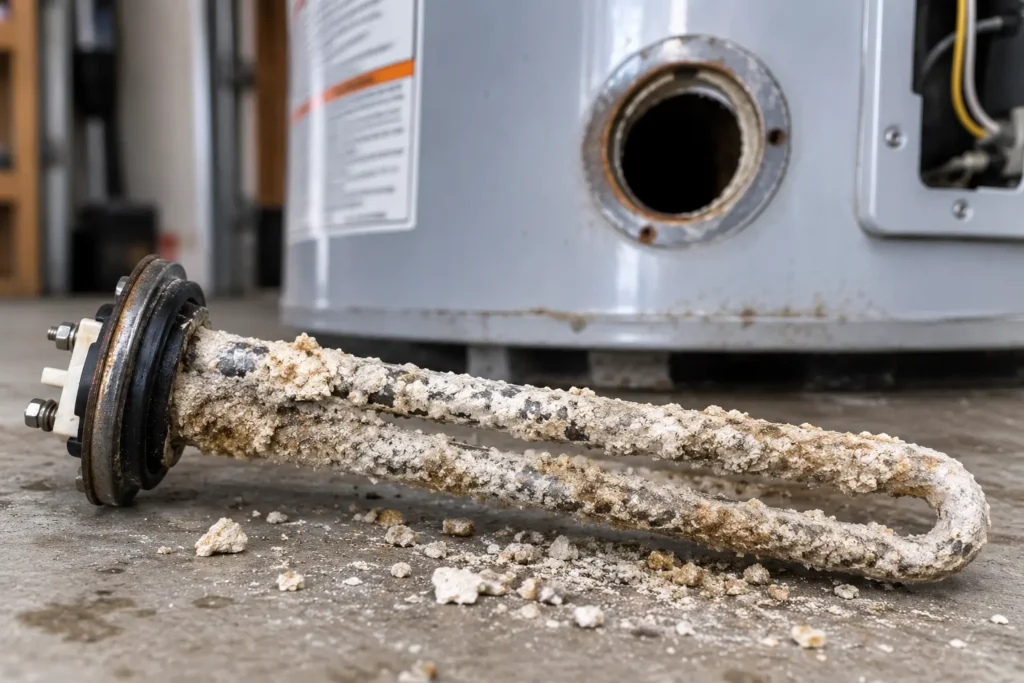
A water heater making popping, rumbling, or knocking noises often has sediment buildup inside the tank. As minerals settle at the bottom of the water heater, they can interfere with normal heating and cause unusual sounds when the burner or heating elements operate. While some noises are harmless, persistent rumbling, loud banging, or new sounds may indicate that the system needs professional attention.
For homeowners in St. Petersburg, Clearwater, and throughout Pinellas County, unusual water heater noises can be frustrating, especially when they happen during showers, laundry, or other daily activities. Florida’s water supply contains minerals that can accumulate inside storage tank water heaters over time, although the amount of buildup varies by location and water conditions.
Understanding what each noise means can help you determine whether the problem involves sediment, water pressure, heating components, or another issue. In many cases, professional flushing and maintenance can reduce sediment-related noise and improve normal operation. However, flushing may not resolve every problem, particularly when the tank has extensive buildup or damaged components.
Florida Water Heater Pros provides water heater inspections, troubleshooting, flushing, and maintenance services throughout Pinellas County.
Is your water heater making unusual noises? Call Florida Water Heater Pros at 714-686-1649 to request a professional inspection or free phone estimate.
Why Is My Water Heater Making Noise?
Water heaters make some sounds during normal operation. You may hear water moving through pipes, the burner igniting, or metal components expanding as the equipment heats.
However, loud popping, persistent rumbling, repeated knocking, or unfamiliar hissing may indicate a problem that needs attention.
The most common causes of unusual water heater noises include:
- Sediment buildup inside the storage tank
- Mineral deposits around heating elements
- Water pressure changes
- Thermal expansion of metal components
- Loose plumbing connections
- Water flowing through pipes
- Restricted water flow
- Heating element problems
- Gas burner or combustion issues
The type of noise, when it occurs, and whether the water heater still produces hot water can help narrow down the possible cause.
For example, popping or rumbling during heating often points toward sediment buildup. A sharp knocking sound when a faucet or appliance shuts off may be related to water hammer in the plumbing system rather than the water heater itself.
A professional inspection can help identify the source before repairs are recommended.
What Does a Popping Noise From a Water Heater Mean?
A popping water heater commonly indicates sediment buildup at the bottom of a storage tank.
As water is heated, dissolved minerals can separate from the water and settle inside the tank. Over time, these deposits may form a layer around the bottom of the tank or heating surfaces.
When heat becomes trapped beneath sediment, small pockets of water can turn into steam. As the steam escapes through the deposits, it may produce popping or crackling sounds.
The noise may become more noticeable during heating cycles, particularly when the water heater has not been flushed for an extended period.
Is a Popping Water Heater Dangerous?
A popping sound does not automatically mean the water heater is about to fail. However, it can indicate that sediment is interfering with normal heating.
Continued sediment buildup may contribute to reduced heating efficiency, uneven heat transfer, and additional stress on certain components.
If the noise becomes louder, hot water performance declines, or the water heater develops leaks, arrange a professional inspection.
Homeowners should not ignore persistent popping simply because the unit continues producing hot water.
Why Is My Water Heater Rumbling?
A rumbling water heater often has sediment or mineral deposits inside the storage tank.
As the burner or heating elements warm the water, trapped water beneath sediment may create low rumbling or boiling-like sounds.
The noise may resemble a distant engine, rolling vibration, or water boiling inside a large pot.
Rumbling is particularly associated with storage tank water heaters because sediment can settle at the bottom of the tank.
Can Sediment Cause a Water Heater to Overheat?
Sediment can interfere with normal heat transfer, causing some heating surfaces to become hotter than intended.
In gas water heaters, heavy deposits may affect how heat moves from the burner through the bottom of the tank.
In electric water heaters, mineral buildup can collect around heating elements and interfere with their performance.
Water heaters contain temperature controls and safety devices, but these components do not eliminate the need to address excessive sediment or other operating problems.
If you notice loud rumbling, unusual temperatures, leaking water, or signs of overheating, stop using the equipment when it is safe to do so and contact a qualified professional.
Water Heater Noise Guide: What Different Sounds Mean
Not every water heater noise is caused by sediment. Identifying the sound can help determine which components may need attention.
| Water Heater Noise | Possible Cause | Recommended Action |
|---|---|---|
| Popping | Sediment trapping heated water | Schedule inspection and consider flushing |
| Rumbling | Heavy sediment buildup | Professional tank flushing and evaluation |
| Knocking | Water hammer or pipe movement | Inspect water pressure and plumbing |
| Hissing | Heating activity, moisture, or possible leakage | Check for visible leaks and arrange inspection |
| Sizzling | Water contacting hot surfaces or normal heating sounds | Inspect for leaks or abnormal operation |
| Ticking | Metal expansion or contraction | Monitor and inspect if persistent |
| Whistling | Restricted flow or valve-related issues | Professional plumbing inspection |
| Banging | Water hammer or loose piping | Evaluate plumbing connections and pressure |
| Humming | Electrical components or vibration | Inspect if loud, new, or persistent |
These are possible explanations rather than confirmed diagnoses. Several problems can produce similar sounds, so the equipment may need professional testing.
Why Is My Water Heater Making a Knocking or Banging Noise?
Knocking or banging noises may originate from the water heater, but they can also come from the plumbing system connected to it.
One possible cause is water hammer, which occurs when moving water suddenly stops or changes direction.
This can happen when a washing machine valve closes, a dishwasher finishes filling, or a faucet shuts off quickly.
The resulting pressure wave can cause pipes to move or produce a sharp knocking sound.
How Can You Tell if the Noise Is Water Hammer?
Water hammer often occurs when water flow suddenly stops rather than during the water heater’s heating cycle.
You may hear a loud knock immediately after turning off a faucet or when an appliance stops using water.
Other signs may include vibrating pipes or repeated banging near plumbing connections.
A plumber can evaluate water pressure, pipe supports, and appropriate water hammer control devices.
If the knocking happens only while the water heater is heating, sediment or thermal expansion may be more likely.
Why Is My Water Heater Hissing or Sizzling?
A hissing or sizzling sound can have several possible causes.
Some electric water heaters produce faint sounds during normal heating. However, persistent hissing or sizzling may also indicate moisture contacting hot components, a small leak, or another equipment problem.
Gas water heaters may produce sounds during burner operation, but unusual hissing near gas piping or controls requires caution.
If you suspect a gas leak or smell gas, leave the area immediately and contact your gas utility or emergency services from a safe location. Do not operate switches, appliances, or ignition sources where gas may be present.
If you notice water dripping, moisture around the base, or unexplained hissing, arrange a professional inspection.
Do not remove electrical covers or attempt to inspect energized components yourself.
Why Does My Water Heater Make a Ticking Sound?
Ticking or clicking sounds can occur as metal components expand and contract during heating and cooling.
Water heater tanks, fittings, and nearby pipes may change temperature as hot water moves through the system.
This movement can produce occasional ticking sounds.
Some electric and gas water heaters also make clicking sounds when controls activate.
However, repeated clicking without successful ignition, frequent restarting, or unusual equipment behavior may indicate a control or ignition problem.
If the ticking is new, unusually loud, or accompanied by unreliable hot water, contact a qualified plumber.
Can Sediment Buildup Damage a Water Heater?
Sediment buildup can affect water heater performance and contribute to equipment problems over time.
As minerals accumulate, they may reduce the effectiveness of heat transfer and interfere with normal operation.
Potential effects include:
Reduced Heating Efficiency
Sediment can create an insulating layer between the heating surface and the water.
The water heater may need to operate longer to achieve the desired temperature, depending on the system and extent of the buildup.
Unusual Popping and Rumbling
Water trapped beneath mineral deposits may produce popping or rumbling sounds as it heats.
These noises may become more noticeable as deposits accumulate.
Reduced Available Hot Water
Sediment occupies some space inside the tank and may interfere with heating performance.
Homeowners may notice that hot water runs out sooner than expected, although this symptom can also result from sizing issues, heating element problems, or changes in household demand.
Additional Stress on Components
Heavy mineral deposits can affect heating surfaces and certain internal components.
Over time, unresolved operating problems may contribute to premature component failure.
Difficult Maintenance
Sediment that remains inside a tank for an extended period may become compacted or hardened.
In these situations, a standard flush may not remove all deposits, and additional evaluation may be necessary.
Will Flushing a Water Heater Stop Popping and Rumbling?
Flushing a water heater can reduce popping and rumbling when loose sediment is the primary cause. The process removes water and accumulated debris from the storage tank through the drain connection.
However, flushing does not guarantee that every noise will disappear.
If deposits have hardened, the drain valve is blocked, or the tank has developed other problems, additional service may be required.
How Does Water Heater Flushing Work?
During professional maintenance, a plumber evaluates the water heater and follows the manufacturer’s recommended procedure for draining or flushing the equipment.
Depending on the system, the process may involve safely shutting down the heater, controlling the water supply, draining water through the appropriate connection, and checking for sediment discharge.
The plumber may also inspect accessible components and check for signs of leakage or corrosion.
The exact procedure depends on the water heater type, model, condition, and installation.
How Often Should You Flush a Water Heater in Florida?
Flushing frequency depends on water quality, manufacturer recommendations, equipment condition, and household usage.
Some manufacturers recommend periodic flushing as part of routine maintenance. Homes with higher mineral content or visible sediment problems may need more frequent evaluation.
A plumber can help determine an appropriate maintenance schedule based on the water heater’s condition.
Florida Water Heater Pros provides water heater maintenance services in St. Petersburg, FL for homeowners throughout Clearwater and Pinellas County. Our team can inspect sediment-related problems, perform appropriate maintenance, and recommend repairs when necessary.
Can You Flush a Noisy Water Heater Yourself?
Some water heater manufacturers provide homeowner maintenance instructions that include draining or flushing the tank.
However, the procedure involves hot water, pressurized plumbing, and gas or electrical equipment.
Improper handling can cause burns, water damage, or equipment problems.
Older water heaters may also have drain valves that are difficult to operate or mineral deposits that restrict drainage.
If the water heater has never been flushed, makes loud noises, shows signs of corrosion, or has an existing leak, professional evaluation is recommended before attempting maintenance.
Homeowners should not force stuck valves, remove safety components, or attempt to drain equipment without understanding the manufacturer’s requirements.
Why Is My Water Heater Still Making Noise After Flushing?
If a water heater continues popping or rumbling after flushing, sediment may not be the only cause.
Possible explanations include:
- Hardened mineral deposits remain inside the tank.
- The flushing process did not remove all loose sediment.
- Heating elements have mineral buildup.
- The noise originates from nearby plumbing.
- Water pressure or thermal expansion is causing pipe movement.
- A burner, valve, or other component requires inspection.
The type of noise and when it occurs can help identify the next troubleshooting step.
A professional may recommend further maintenance, component repair, or replacement depending on the condition of the equipment.
Repeated flushing without identifying the actual cause may not resolve the problem.
Do Tankless Water Heaters Make Popping or Rumbling Noises?
Tankless water heaters operate differently from traditional storage tank systems.
Because they heat water as it flows through the equipment, they do not collect sediment at the bottom of a large storage tank in the same way.
However, mineral scale can accumulate inside a tankless water heater’s heat exchanger, especially when the water contains dissolved minerals.
Scale buildup may restrict water flow, interfere with heat transfer, or contribute to unusual operating sounds.
Tankless systems may also produce normal sounds when burners ignite, fans operate, or water moves through internal components.
If the noise becomes louder, the unit displays an error code, or hot water performance declines, professional inspection may be necessary.
Tankless maintenance procedures differ from storage tank flushing. Descaling should follow the manufacturer’s instructions and use approved equipment and cleaning solutions.
Is a Noisy Water Heater a Sign It Needs Replacement?
Not every noisy water heater needs replacement.
Popping and rumbling caused by loose sediment may improve after appropriate maintenance.
However, replacement may become necessary when the water heater has extensive internal damage, persistent leaks, severe corrosion, or other problems that cannot be safely or economically repaired.
Several warning signs deserve attention.
Persistent Noise After Maintenance
If popping or rumbling continues after appropriate flushing and inspection, the tank may have hardened deposits or another unresolved problem.
Visible Rust or Corrosion
Rust around the tank, connections, or surrounding components may indicate deterioration.
The source and extent of corrosion should be evaluated before deciding whether repair is appropriate.
Water Leaking From the Tank
A leak originating from the storage tank itself may indicate a failure that requires replacement.
Leaks from valves or plumbing connections may have different repair options.
Unreliable Hot Water
If the water heater makes unusual noises and no longer provides consistent hot water, a heating component or another part of the system may be malfunctioning.
Repeated Repairs
A water heater requiring frequent repairs may need a broader evaluation to determine whether continued service is practical.
Florida Water Heater Pros can inspect the equipment and explain whether maintenance, repair, or replacement is the appropriate next step.
How Can Florida Homeowners Prevent Water Heater Noise?
Preventing unusual water heater noises starts with appropriate maintenance and attention to changes in equipment performance.
Schedule Routine Water Heater Maintenance
Professional maintenance can help identify sediment accumulation, worn components, and other developing problems.
The recommended schedule should follow manufacturer guidance and account for local water conditions.
Monitor Water Pressure
Excessive or fluctuating water pressure may contribute to pipe movement and banging noises.
A plumber can evaluate the plumbing system and recommend appropriate corrections.
Pay Attention to New Sounds
An occasional ticking sound may be normal, but persistent popping, loud rumbling, or repeated banging should not be ignored.
Keeping track of when the noise occurs can help a technician identify its source.
Check for Visible Leaks
Look for moisture around the base of the water heater, plumbing connections, and nearby flooring.
Do not remove covers or touch electrical components while checking for leaks.
If you notice active leaking, arrange professional assistance.
Follow Manufacturer Maintenance Instructions
Different water heater types require different maintenance procedures.
Gas, electric, tankless, and heat pump water heaters should be maintained according to their specific manufacturer requirements.
Frequently Asked Questions About Noisy Water Heaters
Why is my water heater making a popping noise?
Popping commonly occurs when sediment traps small pockets of water near the heating surface. As the water heats and escapes through the deposits, it can create popping sounds.
Is it normal for a water heater to rumble?
Occasional operating sounds can be normal, but persistent rumbling may indicate sediment buildup or another problem affecting heating performance.
Will flushing my water heater stop the noise?
Flushing may reduce popping and rumbling caused by loose sediment. It may not eliminate noise from hardened deposits, damaged components, or plumbing problems.
Can sediment damage a water heater?
Yes. Heavy sediment accumulation can interfere with heat transfer, affect heating performance, and contribute to equipment problems over time.
Why does my water heater make noise when I use hot water?
The sound may come from water moving through pipes, thermal expansion, heating activity, or sediment inside the tank. The timing and type of noise can help identify the cause.
Why is my water heater making a knocking noise?
Knocking may result from water hammer, pipe movement, thermal expansion, or sediment-related heating sounds. A plumber can determine whether the problem originates inside the water heater or the connected plumbing.
Is a hissing water heater dangerous?
Not every hissing sound indicates danger, but persistent hissing may be associated with leaks or equipment problems. If you smell gas, leave immediately and contact your gas utility or emergency services from a safe location.
Can an electric water heater make popping noises?
Yes. Mineral deposits around heating elements or inside the tank can contribute to popping or crackling sounds during heating.
Do tankless water heaters need flushing?
Tankless systems may require periodic descaling or flushing of the heat exchanger according to manufacturer instructions. This maintenance differs from draining sediment from a storage tank.
Should I replace my water heater if it makes noise?
Not necessarily. Some noises can be resolved through maintenance or repair. Replacement may be appropriate if the equipment has significant damage, persistent leaks, or problems that cannot be safely repaired.
Does Florida Water Heater Pros provide water heater flushing in Clearwater?
Florida Water Heater Pros provides water heater maintenance and troubleshooting services throughout Clearwater, St. Petersburg, and Pinellas County. Contact the team to discuss flushing and inspection options for your equipment.
Get Professional Help With a Noisy Water Heater in Pinellas County
A water heater making popping, rumbling, knocking, or hissing noises may need maintenance or repair. Sediment buildup is a common cause of popping and rumbling in storage tank systems, but unusual sounds can also indicate water pressure problems, worn components, or other equipment issues.
Florida Water Heater Pros provides water heater inspections, maintenance, flushing, repairs, and replacements for homeowners throughout St. Petersburg, Clearwater, Largo, Dunedin, Palm Harbor, Safety Harbor, Pinellas Park, and surrounding Pinellas County communities.
Our licensed and insured plumbing team can inspect your water heater, identify the likely cause of the noise, and explain the recommended service. We work with electric, natural gas, propane, tankless, and heat pump water heaters.
Whether your water heater needs sediment removal, component repair, or a replacement evaluation, our team provides upfront pricing based on the work required.
Schedule a Water Heater Inspection or Request a Free Estimate
Don’t ignore persistent popping, rumbling, or banging noises coming from your water heater.
Call Florida Water Heater Pros at 714-686-1649 to request professional water heater troubleshooting, maintenance, or get a free phone estimate.
We serve homeowners and businesses throughout St. Petersburg, Clearwater, and Pinellas County, Florida.
Florida Water Heater Pros
Phone: 714-686-1649
Service Area: St. Petersburg, Clearwater, and Pinellas County, FL
Florida Plumbing License: CFC1432953
Licensed and Insured
Registered DBA: Pop Leland Plumbing
