
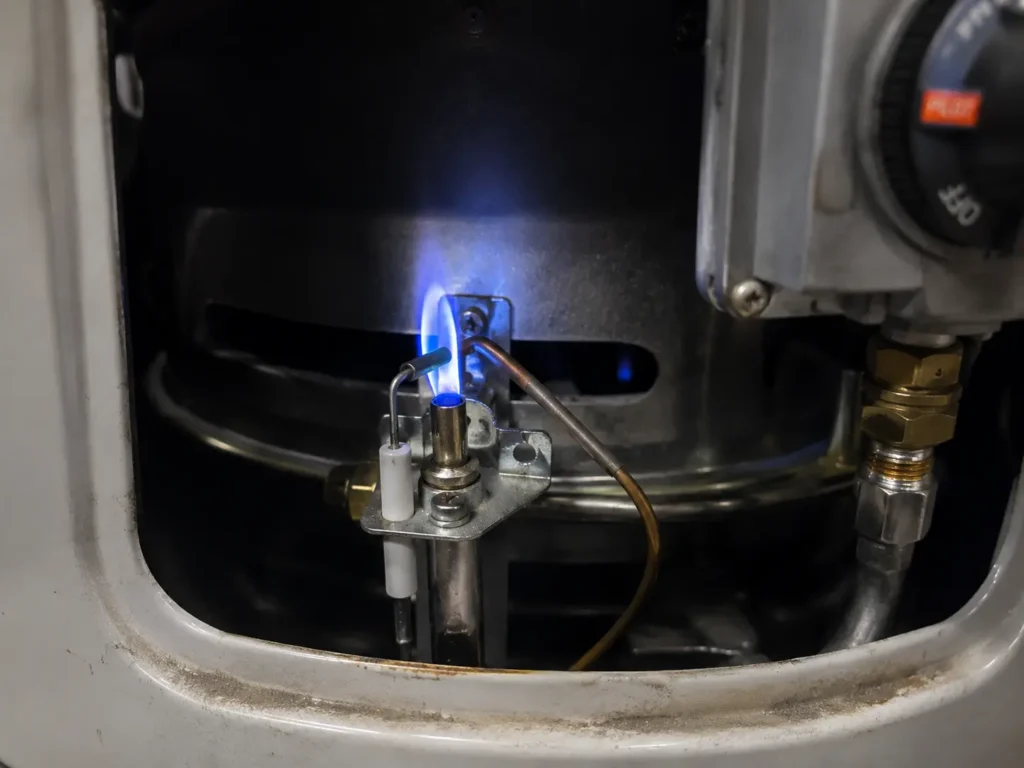
To relight a water heater pilot light, follow the lighting instructions printed on your gas water heater. Most standing-pilot models require turning the gas control to OFF, waiting at least five minutes, selecting PILOT, and using the built-in igniter while holding the pilot control. However, the exact procedure varies by manufacturer and model.
If your water heater pilot light keeps going out, relighting it may not solve the underlying problem. A faulty thermocouple, dirty pilot assembly, gas supply issue, or malfunctioning gas control valve may prevent the flame from staying lit.
For homeowners in St. Petersburg, Clearwater, and throughout Pinellas County, a pilot light that repeatedly goes out can mean unexpected cold showers and unreliable hot water. Understanding how the pilot system works can help you recognize common problems and determine when professional water heater repair is necessary.
Florida Water Heater Pros provides gas water heater inspections, troubleshooting, and repairs throughout Pinellas County, Florida.
Need help with a pilot light that won’t stay lit? Call Florida Water Heater Pros at 714-686-1649 for professional assistance.
What Is a Water Heater Pilot Light?
A water heater pilot light is a small gas flame used to ignite the main burner in certain gas-powered water heaters. It is part of the ignition system that allows the water heater to heat the water stored inside its tank.
When the water heater needs to produce hot water, the gas control system allows the main burner to ignite. The burner heats the water until the thermostat reaches the selected temperature.
Traditional gas water heaters commonly use standing pilot lights, which remain lit between heating cycles. Other models use electronic ignition systems that do not maintain a continuous pilot flame.
If your water heater has electronic ignition, the standing-pilot relighting instructions in this guide may not apply. Check the manufacturer’s operating instructions before attempting any troubleshooting.
How Does a Water Heater Pilot Light Work?
A traditional standing-pilot system typically includes several components:
- Pilot burner: Produces the small flame used to ignite the main burner.
- Thermocouple or flame-sensing device: Helps the gas control detect whether the pilot flame is present.
- Gas control valve: Regulates gas flow to the pilot and main burner.
- Igniter: Produces a spark to light the pilot on models equipped with a built-in ignition button.
- Main burner: Produces the heat needed to warm the water inside the tank.
These components must work together for the water heater to operate correctly.
If the pilot flame goes out or the flame-sensing system fails, the gas control is designed to prevent normal burner operation.
How to Relight a Gas Water Heater Pilot Light Safely
Before attempting to relight a pilot light, identify your water heater model and read the manufacturer’s instructions.
The steps below describe a common standing-pilot lighting sequence. They are not a substitute for the instructions printed on your equipment.
If the instructions are missing, the controls are damaged, or you are unsure how the system operates, contact a qualified plumbing professional.
Step 1: Check for Gas Odors or Visible Damage
Before touching the controls, check whether you notice a gas odor, damaged gas piping, signs of flooding, or other unsafe conditions.
If you smell gas, do not attempt to relight the pilot.
Leave the area immediately and contact your gas utility or emergency services from a safe location. Avoid operating electrical switches, appliances, or anything that could create a spark.
If the water heater has been flooded, damaged by a storm, or exposed to standing water, do not attempt to restart it before a professional inspection.
Step 2: Locate the Gas Control Valve
The gas control is typically located near the lower portion of a traditional gas tank water heater.
Depending on the model, it may include a control knob, temperature adjustment, status indicator, and ignition button.
Look for operating positions labeled OFF, PILOT, and ON.
Some newer water heaters use electronic controls or different lighting procedures. Do not assume every model operates the same way.
Step 3: Turn the Gas Control to OFF
If your manufacturer’s instructions direct you to do so, turn the gas control knob to the OFF position.
This stops the normal gas supply through the control while you prepare for the lighting procedure.
Do not force the knob if it does not turn normally.
Step 4: Wait at Least Five Minutes
Many standing-pilot water heaters require waiting at least five minutes after turning the control to OFF.
This waiting period allows residual gas to dissipate before another lighting attempt.
Follow the waiting period specified by your water heater manufacturer.
If you smell gas at any point, stop immediately, leave the area, and contact your gas utility or emergency services from a safe location.
Step 5: Turn the Control to PILOT
After completing the manufacturer’s required waiting period, follow the instructions for selecting the PILOT position.
On many models, the pilot control must be pressed or held while the pilot is being lit.
Do not force the control or attempt to bypass any safety mechanism.
Step 6: Use the Built-In Igniter
For water heaters equipped with an electronic spark igniter, follow the manufacturer’s instructions for pressing the ignition button while holding the pilot control.
Depending on the model, you may need to press the igniter more than once.
Some older models use different lighting methods. Never introduce an external flame unless the manufacturer’s instructions specifically authorize that procedure.
If the pilot does not ignite after the permitted attempts, stop and consult the manufacturer’s troubleshooting instructions or contact a professional.
Step 7: Hold the Pilot Control as Directed
Once the pilot ignites, many water heaters require holding the pilot control for a specified period.
This allows the flame-sensing device to heat up and signal that the pilot flame is present.
The required holding time varies by model.
Release the control according to the manufacturer’s instructions and confirm that the pilot remains lit.
If the pilot immediately goes out, do not attempt to wedge the control in place or bypass the safety system.
Step 8: Return the Water Heater to Normal Operation
If the pilot remains lit, follow the manufacturer’s instructions for returning the gas control to its normal operating position.
Check the water heater’s status indicator, if equipped, and confirm that the system operates normally.
If the pilot goes out again, the burner fails to ignite, or the water heater displays an error, stop troubleshooting and arrange a professional inspection.
Why Won’t My Water Heater Pilot Light Stay Lit?
A pilot light that ignites but goes out when you release the control may indicate a problem with the thermocouple, flame-sensing system, pilot flame, or gas control valve.
A pilot that repeatedly goes out after normal operation can have several possible causes.
1. Faulty Thermocouple
A thermocouple is a safety component found on many traditional standing-pilot gas water heaters.
When heated by the pilot flame, it produces a small electrical signal that helps the gas control determine whether the flame is present.
If the thermocouple is damaged, incorrectly positioned, or no longer functioning properly, the gas control may shut off the pilot gas supply.
Common symptoms include a pilot that lights but goes out when the control is released.
However, this symptom does not automatically mean the thermocouple needs replacement. A weak pilot flame or gas control problem can produce similar results.
2. Dirty or Restricted Pilot Assembly
Dust, debris, and other buildup can affect the pilot burner.
If the pilot flame becomes weak or irregular, it may not heat the thermocouple or flame sensor properly.
A restricted pilot assembly can also make the flame difficult to ignite or keep burning.
Cleaning or servicing gas-burning components should be performed according to manufacturer requirements by a qualified professional.
3. Gas Supply Problems
A pilot light requires a consistent gas supply to operate correctly.
Problems with gas pressure, supply interruptions, or gas control components can prevent the pilot from igniting or staying lit.
If other gas appliances are also experiencing problems, contact your gas utility or a qualified professional.
Do not attempt to adjust gas pressure or modify gas piping yourself.
4. Malfunctioning Gas Control Valve
The gas control valve regulates fuel delivery to the pilot and main burner.
If the valve is defective, it may prevent the pilot from staying lit or stop the main burner from operating correctly.
Gas control valves contain safety mechanisms and should not be disassembled or modified by homeowners.
A professional can evaluate whether the problem involves the valve, pilot assembly, flame sensor, or another component.
5. Venting or Combustion Air Problems
Gas water heaters require proper combustion air and venting.
Restricted airflow, blocked vents, or other installation problems may interfere with safe operation.
In some situations, these conditions can affect burner performance or contribute to repeated pilot outages.
Venting problems may also create carbon monoxide hazards.
If you suspect a venting problem, notice soot, or experience a carbon monoxide alarm, stop using the equipment and seek qualified assistance. If the alarm sounds, leave the building and contact emergency services.
6. Damaged Ignition Components
Some gas water heaters use electronic ignition systems instead of traditional standing pilots.
A damaged igniter, faulty sensor, wiring problem, or control system issue may prevent ignition.
These systems require troubleshooting procedures specific to the manufacturer and model.
If your water heater does not have a standing pilot, do not use instructions intended for older pilot-light systems.
How Do You Know if the Thermocouple Is Bad?
A faulty thermocouple is one possible reason a traditional gas water heater pilot light will not stay lit.
Common warning signs include:
- The pilot ignites but goes out when the control is released.
- The pilot flame appears to be present, but the gas control does not maintain operation.
- The water heater repeatedly loses its pilot flame.
- The unit stops producing hot water because the main burner cannot ignite.
These symptoms can also result from a weak pilot flame, poor flame contact, damaged connections, or a defective gas control valve.
A plumber can inspect the pilot assembly and test the thermocouple or applicable flame-sensing components to identify the problem.
Replacing the thermocouple without confirming the cause may not resolve the issue.
Can You Replace a Water Heater Thermocouple Yourself?
Thermocouple replacement involves working with components connected to the gas control and pilot assembly.
Although replacement parts may be available, incorrect installation can affect the water heater’s safety system.
Some newer gas water heaters use integrated burner assemblies or flame-sensing components that differ from traditional thermocouples.
The correct repair depends on the equipment model and manufacturer’s service requirements.
For safety, homeowners should have a qualified plumbing professional inspect and repair these components.
Florida Water Heater Pros provides water heater repair services in St. Petersburg, FL for homeowners experiencing pilot light problems, unreliable hot water, and other gas water heater issues.
Our licensed and insured team can inspect the equipment, identify the cause of the problem, and explain the available repair options.
Why Does My Pilot Light Keep Going Out After Relighting?
A pilot light that repeatedly goes out usually indicates that the underlying problem has not been resolved.
For example, a weak pilot flame may temporarily ignite but fail to maintain the proper signal to the gas control.
A failing thermocouple or flame sensor may also cause the gas control to shut off fuel even when the pilot initially lights.
Other possible causes include damaged ignition components, gas supply problems, or issues affecting combustion air.
Repeatedly relighting the pilot without addressing the cause is not a reliable repair.
If the pilot goes out again after following the manufacturer’s lighting procedure, stop attempting to restart the system and schedule a professional inspection.
What if the Pilot Light Is Lit but There Is No Hot Water?
A lit pilot light does not necessarily mean the water heater is operating correctly.
The pilot’s purpose is to ignite the main burner when the water heater needs to heat water. If the main burner does not operate, the tank may not produce enough hot water even though the pilot remains lit.
Possible causes include a thermostat problem, defective gas control, burner issue, or another equipment malfunction.
Homeowners may also notice that the water is only lukewarm or that hot water runs out sooner than expected.
A professional can determine whether the problem involves the ignition system, temperature controls, burner operation, or another component.
Do Tankless Water Heaters Have Pilot Lights?
Most modern tankless water heaters use electronic ignition rather than a continuously burning standing pilot light.
When hot water is requested, the system activates its ignition process and heats water as it flows through the unit.
If a tankless water heater fails to ignite, the cause may involve the gas supply, ignition system, sensors, electrical power, or another component.
Many tankless systems display error codes that help identify the type of problem.
Homeowners should consult the manufacturer’s instructions and avoid attempting repairs involving gas controls or internal electrical components.
Florida Water Heater Pros also provides tankless water heater inspections and repairs throughout Pinellas County.
When Should You Call a Plumber for a Pilot Light Problem?
Some standing-pilot water heaters can be relit by following the manufacturer’s instructions. However, repeated pilot failures or signs of equipment damage require professional attention.
Contact a qualified plumber if:
- The pilot light will not ignite.
- The pilot lights but immediately goes out.
- The pilot repeatedly goes out after relighting.
- The water heater produces little or no hot water.
- The ignition system displays an error.
- The equipment has visible damage or corrosion.
- The burner or gas control appears to be malfunctioning.
- You are unsure how to follow the manufacturer’s lighting instructions.
If you smell gas, leave the area and contact your gas utility or emergency services from a safe location rather than waiting for a plumbing appointment.
A professional inspection can help determine whether the water heater needs a component repair or more extensive service.
How Can You Prevent Water Heater Pilot Light Problems?
Regular water heater maintenance can help identify developing problems before they interrupt hot water service.
During a professional maintenance visit, a plumber may inspect accessible components, review burner operation, check for visible corrosion, and evaluate equipment condition according to the manufacturer’s service requirements.
Homeowners can also help by keeping the surrounding area clear and avoiding storage of combustible materials near the water heater.
Keep the Area Around the Water Heater Clear
Gas water heaters require appropriate clearance and combustion air.
Avoid placing boxes, cleaning products, gasoline, or other combustible materials near the equipment.
Follow the manufacturer’s clearance requirements and keep designated air openings unobstructed.
Watch for Changes in Performance
Unexpected changes in hot water temperature, repeated pilot outages, unusual noises, or ignition problems may indicate that the equipment needs attention.
Addressing these issues early can help prevent further interruptions.
Schedule Professional Maintenance
Maintenance requirements vary by water heater type and manufacturer.
A professional can review the equipment’s condition and recommend appropriate maintenance based on its age, installation, and operating history.
Frequently Asked Questions About Water Heater Pilot Lights
How do I relight my water heater pilot light?
Follow the lighting instructions printed on your water heater. Many standing-pilot models require turning the gas control to OFF, waiting at least five minutes, selecting PILOT, and using the built-in igniter while holding the pilot control. Procedures vary by model.
Why does my water heater pilot light go out when I release the button?
This may indicate a faulty thermocouple, weak pilot flame, flame-sensing problem, or defective gas control valve. A professional inspection can identify the cause.
How long should I hold the pilot light button?
The required time depends on the water heater model. Follow the manufacturer’s instructions rather than assuming every gas water heater uses the same holding period.
Can a bad thermocouple cause no hot water?
Yes. On a traditional standing-pilot system, a defective thermocouple can prevent the pilot from staying lit, which stops the main burner from operating normally.
Why won’t my pilot light ignite?
Possible causes include ignition system problems, gas supply issues, a restricted pilot assembly, or a malfunctioning gas control. Do not repeatedly attempt ignition if the manufacturer-directed procedure fails.
Is it dangerous if my water heater pilot light keeps going out?
Repeated pilot outages may indicate a malfunction that requires attention. Modern gas controls include safety features, but homeowners should not bypass them or continue restarting equipment that repeatedly fails.
Can I use a lighter to relight my water heater?
Only use a lighting method specifically authorized by your water heater manufacturer. Many modern models have built-in ignition systems and should not be lit with an external flame.
Do electric water heaters have pilot lights?
No. Standard electric water heaters use electrical heating elements rather than gas burners and pilot lights.
Does a tankless water heater have a pilot light?
Most modern tankless water heaters use electronic ignition instead of a continuously burning pilot flame.
Can Florida Water Heater Pros fix a pilot light that won’t stay lit?
Florida Water Heater Pros provides gas water heater troubleshooting and repair services throughout St. Petersburg, Clearwater, and Pinellas County. Our team can inspect pilot light problems and recommend appropriate repairs.
Get Professional Help With Water Heater Pilot Light Problems in Pinellas County
A water heater pilot light that will not ignite or stay lit can leave your household without reliable hot water. Although some standing-pilot systems can be relit using the manufacturer’s instructions, repeated failures may indicate a problem with the thermocouple, pilot assembly, gas control valve, or another component.
Florida Water Heater Pros provides gas water heater inspections, troubleshooting, maintenance, and repairs throughout St. Petersburg, Clearwater, Largo, Dunedin, Palm Harbor, Safety Harbor, Pinellas Park, and surrounding Pinellas County communities.
Our licensed and insured plumbing team can evaluate the equipment, explain the problem, and provide upfront pricing for recommended work. We service residential and commercial water heaters and help customers determine whether repair or replacement is appropriate.
Schedule a Water Heater Inspection or Request an Estimate
Don’t let a pilot light problem leave you without hot water.
Call Florida Water Heater Pros at 714-686-1649 to request professional water heater troubleshooting or get a free phone estimate.
Our team serves homeowners and businesses throughout St. Petersburg, Clearwater, and Pinellas County, Florida.
Florida Water Heater Pros
Phone: 714-686-1649
Service Area: St. Petersburg, Clearwater, and Pinellas County, FL
Florida Plumbing License: CFC1432953
Licensed and Insured
Registered DBA: Pop Leland Plumbing
