
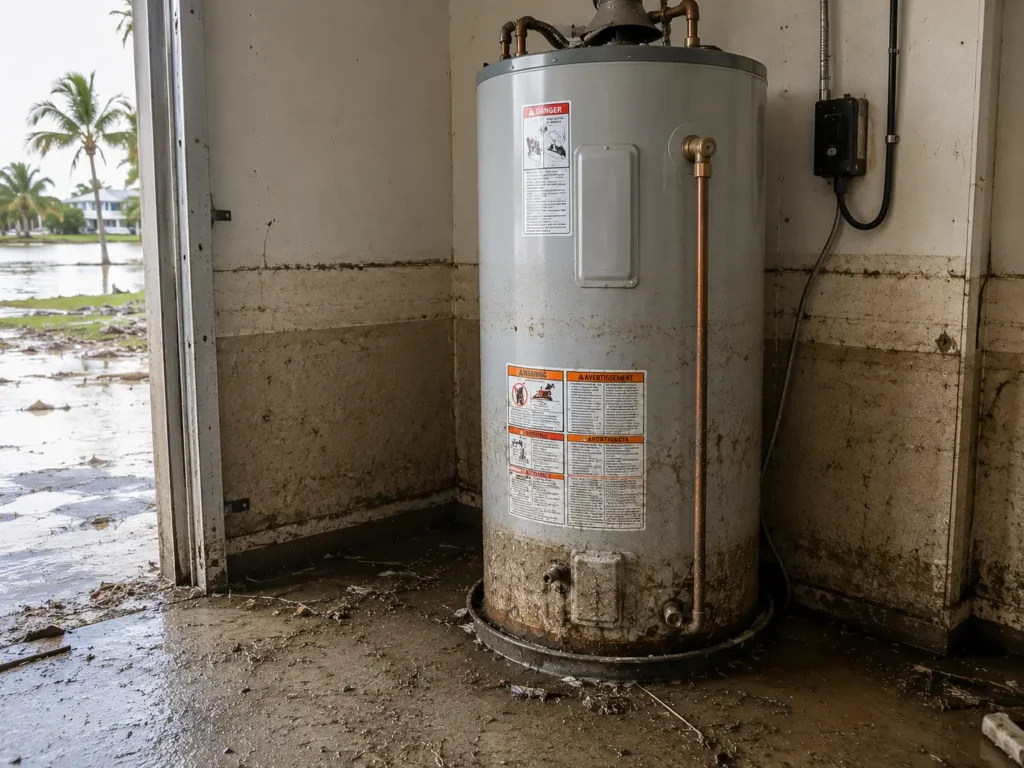
If your water heater was flooded during a hurricane, do not turn it back on. Floodwater can damage electrical connections, gas controls, burners, insulation, and other internal components. Even when the outside of the unit appears dry, hidden damage may make it unsafe to operate.
Florida homeowners face this problem during hurricane season, particularly in coastal communities such as St. Petersburg, Clearwater, and other areas of Pinellas County. Storm surge, heavy rainfall, and rising floodwater can affect water heaters installed in garages, utility rooms, ground-floor spaces, and other flood-prone locations.
A water heater exposed to significant flooding often needs replacement, especially when water reaches electrical connections, gas valves, burners, or safety controls. The final decision depends on the equipment, the extent of the damage, and the manufacturer’s safety requirements.
FL Water Heater Pros provides water heater inspections, repairs, and replacements throughout Pinellas County. Our licensed and insured plumbing team can evaluate storm-damaged equipment and help homeowners determine the next steps.
Need help with a flooded water heater? Call 714-686-1649 to request an inspection or free phone estimate.
What Happens When a Water Heater Gets Flooded?
Floodwater can affect several components responsible for heating water and keeping the equipment operating safely. The damage depends on how high the water reached, how long the equipment was exposed, and whether the water contained salt, sediment, sewage, or other contaminants.
Electric water heaters contain thermostats, heating elements, wiring, and electrical connections that can be damaged by flooding. Gas water heaters have burners, ignition systems, gas valves, and safety controls that may become contaminated or stop functioning correctly.
Tankless water heaters are also vulnerable because they contain electronic controls, sensors, circuit boards, and other components that can be damaged by moisture.
One concern is that flood damage may not be visible. A water heater can appear dry after the surrounding water recedes while corrosion, sediment, or moisture remains inside the equipment.
For this reason, homeowners should never assume that a flooded water heater is safe simply because it looks normal.
Can You Use a Water Heater After a Hurricane?
A water heater may remain safe to use after a hurricane if the equipment was not exposed to flooding, physical damage, electrical problems, or other conditions affecting its operation.
However, if floodwater reached the water heater, do not attempt to restart it until a qualified professional has evaluated the equipment.
Turning on a flooded electric water heater can create electrical hazards if wiring, thermostats, or other components have been damaged. Gas water heaters may also become unsafe when floodwater reaches burners, ignition systems, or gas controls.
The surrounding utilities must also be considered. Even when the water heater itself was not submerged, damaged electrical connections, gas lines, or other building systems may make operation unsafe.
Homeowners should avoid attempting repairs, resetting electrical breakers, or relighting gas equipment without a professional assessment.
What Should You Do Immediately After Your Water Heater Floods?
The first priority is personal safety. Flooded areas may contain electrical hazards, contaminated water, damaged building materials, and unstable equipment.
1. Stay Away From Flooded Electrical Equipment
Do not enter standing water near electrical panels, outlets, wiring, or appliances that may still be energized.
Never touch electrical switches, breakers, or equipment while standing in water. If electrical power needs to be disconnected, have a qualified person handle it from a safe location.
Wait until the area has been declared safe before approaching the water heater.
2. Do Not Restart the Water Heater
Even if the floodwater has receded, do not turn on the water heater or attempt to relight a gas burner.
Water may remain inside electrical controls, insulation, gas components, or other internal parts. Drying the outside of the equipment does not establish that it is safe to operate.
A professional inspection is needed to determine whether the water heater can be repaired or must be replaced.
3. Check for Gas-Related Hazards
If you smell gas or suspect a gas leak, leave the area immediately and contact your gas utility or emergency services from a safe location.
Do not operate electrical switches, appliances, or ignition sources where gas may be present.
Gas water heaters exposed to flooding should be evaluated by qualified professionals before gas service is restored to the equipment.
4. Take Photos of the Damage
Once the area is safe, photograph the water heater, visible floodwater marks, surrounding damage, and affected components.
If possible, record the model number, serial number, and approximate height of the floodwater.
Keep notes about when the flooding occurred and when the damage was discovered. These records may help when discussing repairs, replacement, or insurance coverage.
5. Contact a Licensed Plumbing Professional
A qualified plumber can inspect the water heater and determine whether it can be safely repaired or should be replaced.
The evaluation may consider the equipment type, extent of flooding, affected components, water contamination, and applicable manufacturer requirements.
FL Water Heater Pros provides water heater inspections and replacement services throughout St. Petersburg, Clearwater, and Pinellas County.
Call 714-686-1649 to discuss your flooded water heater and request an estimate.
Does a Flooded Water Heater Need to Be Replaced?
A water heater exposed to significant flooding often needs replacement, especially when electrical controls, gas valves, burners, or other critical components have been submerged.
The final recommendation depends on the extent of the damage, equipment condition, and manufacturer’s safety instructions.
Several conditions may indicate that replacement is necessary.
Floodwater Reached Electrical Components
Electrical wiring, thermostats, controls, and connections may become damaged or contaminated when submerged. Even after the equipment dries, corrosion and electrical faults may remain.
Gas Controls or Burners Were Submerged
Gas water heaters rely on properly functioning burners, gas valves, ignition systems, and safety controls. Floodwater can interfere with these components and create operating hazards.
Saltwater Entered the Equipment
Storm surge can carry saltwater into garages, utility rooms, and other areas where water heaters are installed.
Saltwater exposure can accelerate corrosion and damage electrical connections, metal components, and other parts of the equipment.
Sediment or Debris Entered the Unit
Floodwater may contain mud, sand, sewage, and other contaminants. These materials can enter exposed components and interfere with normal operation.
The Water Heater Was Physically Damaged
Moving floodwater, floating debris, or shifting equipment can damage plumbing connections, gas lines, mounting components, and the water heater itself.
When Replacement Is the Safer Option
When floodwater damages electrical components, gas controls, or other critical parts, replacing the water heater may be the safest option. FL Water Heater Pros provides water heater replacement and installation services for homeowners in St. Petersburg, Clearwater, and throughout Pinellas County. Our licensed and insured team can inspect the damaged equipment, explain your replacement options, and provide upfront pricing based on your home’s installation requirements.
Can a Flooded Electric Water Heater Be Repaired?
Electric water heaters contain heating elements, thermostats, wiring, and other components that can be affected by flooding.
If floodwater reaches electrical connections or controls, the equipment may develop corrosion, contamination, or electrical faults. These problems may not be immediately visible after the surrounding area dries.
Replacing a damaged thermostat or heating element does not necessarily mean the entire water heater is safe to operate. Other components may also have been affected.
A qualified professional should evaluate the equipment and review the manufacturer’s instructions before recommending repair.
If the water heater cannot be safely restored, replacement may be the appropriate option.
FL Water Heater Pros installs and services electric water heaters throughout Pinellas County and can help homeowners choose equipment based on household hot water demand and installation requirements.
Can a Flooded Gas Water Heater Be Repaired?
Gas water heaters require careful evaluation after flooding because water can affect burners, ignition systems, gas valves, safety controls, and other components.
If floodwater reaches these parts, the water heater may not operate safely even after the surrounding area has dried.
Homeowners should not attempt to relight a flooded gas water heater or repeatedly restart the system.
The gas supply and affected equipment should be evaluated by qualified professionals before operation resumes.
Depending on the extent of the damage and manufacturer requirements, replacement may be necessary.
FL Water Heater Pros installs and services natural gas and propane water heaters throughout St. Petersburg, Clearwater, and surrounding Pinellas County communities.
What Happens to a Tankless Water Heater After Flooding?
Tankless water heaters contain electronic controls, sensors, wiring, and heating components that can be damaged by water exposure.
Although tankless units are often mounted on walls, their location does not automatically protect them from storm surge or severe flooding.
If water reaches sensitive electronic components, the system may display error codes, stop heating water, or develop other operating problems.
A tankless water heater that displays an error code after flooding should not be repeatedly reset or restarted.
Professional evaluation is needed to determine whether the equipment can be repaired safely or whether replacement is required.
The final decision should consider the affected components, manufacturer instructions, equipment condition, and availability of suitable replacement parts.
Does Homeowners Insurance Cover a Flooded Water Heater?
Insurance coverage depends on the cause of the damage, the homeowner’s policy, applicable exclusions, and whether separate flood insurance is in place.
Standard homeowners insurance policies commonly exclude damage caused by flooding. Flood-related losses may require separate flood insurance, while other types of storm damage may be covered differently depending on the policy.
Homeowners should contact their insurance provider to confirm coverage rather than assuming that all hurricane-related water heater damage is included.
How to Document Water Heater Damage for an Insurance Claim
If the area is safe, homeowners should document the damage before removing or replacing equipment whenever practical.
Useful records may include:
- Photographs of the damaged water heater
- Pictures showing the approximate floodwater level
- The equipment model and serial number
- The date of the storm and flooding
- Photographs of surrounding damage
- A professional inspection report, if available
- Repair or replacement estimates
- Receipts for approved emergency work
- Records of communication with the insurance provider
Ask your insurance company whether the damaged equipment needs to be retained for inspection before disposal.
If the equipment presents an immediate safety hazard, follow the instructions of qualified emergency personnel and the insurance provider regarding safe removal.
FL Water Heater Pros can provide an inspection and replacement estimate to help homeowners understand the work required. Insurance coverage and claim approval remain the responsibility of the insurer.
How Much Does It Cost to Replace a Flood-Damaged Water Heater in Florida?
The cost of replacing a flooded water heater depends on the equipment type, capacity, fuel source, installation location, and condition of the existing plumbing and utility connections.
An electric tank replacement may have different requirements from a gas tankless or heat pump water heater installation.
Additional work may be needed when flooding damages electrical connections, gas piping, mounting components, drainage systems, or the surrounding installation area.
Several factors can affect replacement pricing:
- Water heater type and capacity
- Electric, natural gas, or propane connections
- Equipment brand and model
- Existing installation condition
- Plumbing modifications
- Electrical or gas work
- Installation accessibility
- Permit requirements
- Removal of damaged equipment
FL Water Heater Pros provides free phone estimates and upfront pricing based on the available project information. Final pricing depends on the equipment selected and the installation requirements.
Homeowners can provide photographs and information about the existing water heater to help the team understand the situation before scheduling service.
Call 714-686-1649 to request a flooded water heater replacement estimate.
Should You Repair or Replace a Hurricane-Damaged Water Heater?
The decision depends on whether the equipment was exposed to flooding, which components were affected, and whether safe repair is possible under the manufacturer’s instructions.
A water heater that was not submerged and shows no signs of damage may only require an inspection if there are concerns about its condition or surrounding utilities.
However, a unit exposed to contaminated floodwater, particularly around electrical or gas components, is more likely to require replacement.
The water heater’s condition, repair history, and availability of suitable parts may also affect the recommendation.
Safety should remain the priority. Homeowners should not attempt to restore a flooded water heater by drying it out, replacing only visible components, or repeatedly restarting the equipment without professional evaluation.
How Can Florida Homeowners Protect Water Heaters From Future Flooding?
Homeowners in flood-prone areas can reduce potential water heater damage by reviewing the installation location and considering whether the equipment is vulnerable to storm surge, rising water, or repeated flooding.
Review the Installation Location
Water heaters installed in garages, ground-floor utility rooms, and other low-lying areas may be more exposed to flooding.
When planning a replacement, homeowners can discuss whether the existing location remains suitable or whether another location should be considered.
Consider Elevation When Appropriate
In some properties, raising the water heater or relocating it to a less vulnerable area may reduce exposure to future flooding.
Any elevation or relocation must comply with applicable building codes, manufacturer requirements, equipment support needs, and utility connections.
Inspect Electrical and Gas Connections
Electrical and gas connections should be evaluated when changing the water heater’s location or elevation.
A professional installation should account for safe access, equipment requirements, and the condition of the surrounding utilities.
Include the Water Heater in Hurricane Preparation
Before hurricane season, homeowners can photograph their water heater, record the model and serial number, review insurance coverage, and identify whether the installation area is vulnerable to flooding.
Do not attempt to disconnect, relocate, or modify gas or electrical equipment without qualified professional assistance.
Frequently Asked Questions About Flooded Water Heaters
Can I turn on my water heater after a flood?
No. If floodwater reached the water heater, do not restart it until qualified professionals have evaluated the equipment and determined whether it can be safely returned to service.
Will a flooded water heater work after drying out?
It may appear to work, but drying does not establish that electrical controls, gas components, insulation, or other internal parts are safe. Professional evaluation is necessary.
Does a water heater need replacement after hurricane flooding?
Replacement is often necessary when floodwater reaches critical electrical or gas components. The final decision depends on the extent of exposure, equipment condition, and manufacturer requirements.
Can saltwater damage a water heater?
Yes. Saltwater can accelerate corrosion and damage electrical connections, metal components, and other parts of a water heater. Equipment exposed to storm surge should be professionally evaluated.
Can I relight a gas water heater after flooding?
No. Do not attempt to relight a gas water heater exposed to flooding. Gas controls, burners, and other components may have been damaged or contaminated.
Does homeowners insurance cover hurricane water heater damage?
Coverage depends on the policy and cause of damage. Flooding is commonly excluded from standard homeowners policies and may require separate flood insurance.
How quickly can a flooded water heater be replaced?
Replacement timing depends on equipment availability, property conditions, required repairs, permits, and installation requirements. FL Water Heater Pros does not guarantee a specific arrival or completion time.
Can a tankless water heater survive flooding?
A tankless unit may remain unaffected if floodwater never reached sensitive components. However, equipment exposed to flooding requires professional evaluation before operation.
Should I replace my water heater before hurricane season?
Replacement is not automatically necessary before hurricane season. However, homeowners with damaged equipment or installations vulnerable to flooding may benefit from a professional assessment.
Does FL Water Heater Pros serve Clearwater and St. Petersburg?
Yes. FL Water Heater Pros provides water heater services throughout St. Petersburg, Clearwater, and other communities within Pinellas County, Florida.
Get Professional Help With a Flooded or Hurricane-Damaged Water Heater
A flooded water heater should never be restarted without proper evaluation. Stormwater can damage electrical components, gas controls, burners, and internal parts that may not show visible signs of failure.
FL Water Heater Pros provides water heater inspections, repairs, and replacements for homeowners throughout St. Petersburg, Clearwater, Largo, Dunedin, Palm Harbor, Safety Harbor, Pinellas Park, and surrounding Pinellas County communities.
Our licensed and insured plumbing team can evaluate the condition of your water heater, discuss replacement options, and provide upfront pricing based on the installation requirements.
We work with electric, natural gas, propane, tankless, and heat pump water heaters. When replacement is necessary, our team handles applicable permit and inspection requirements as part of the installation process.
Need Help With a Flooded or Hurricane-Damaged Water Heater?
Call FL Water Heater Pros at 714-686-1649 to request a professional inspection or get a free phone estimate for your flooded or hurricane-damaged water heater. Our licensed and insured team serves homeowners throughout St. Petersburg, Clearwater, and Pinellas County, Florida.
FL Water Heater Pros
Serving St. Petersburg, Clearwater, and Pinellas County, Florida
Phone: 714-686-1649
Florida Plumbing License: CFC1432953
Licensed and Insured
Pop Leland Plumbing, DBA FL Water Heater Pros
