Water Heater Temperature: The Right Setting (120°F vs. 140°F)
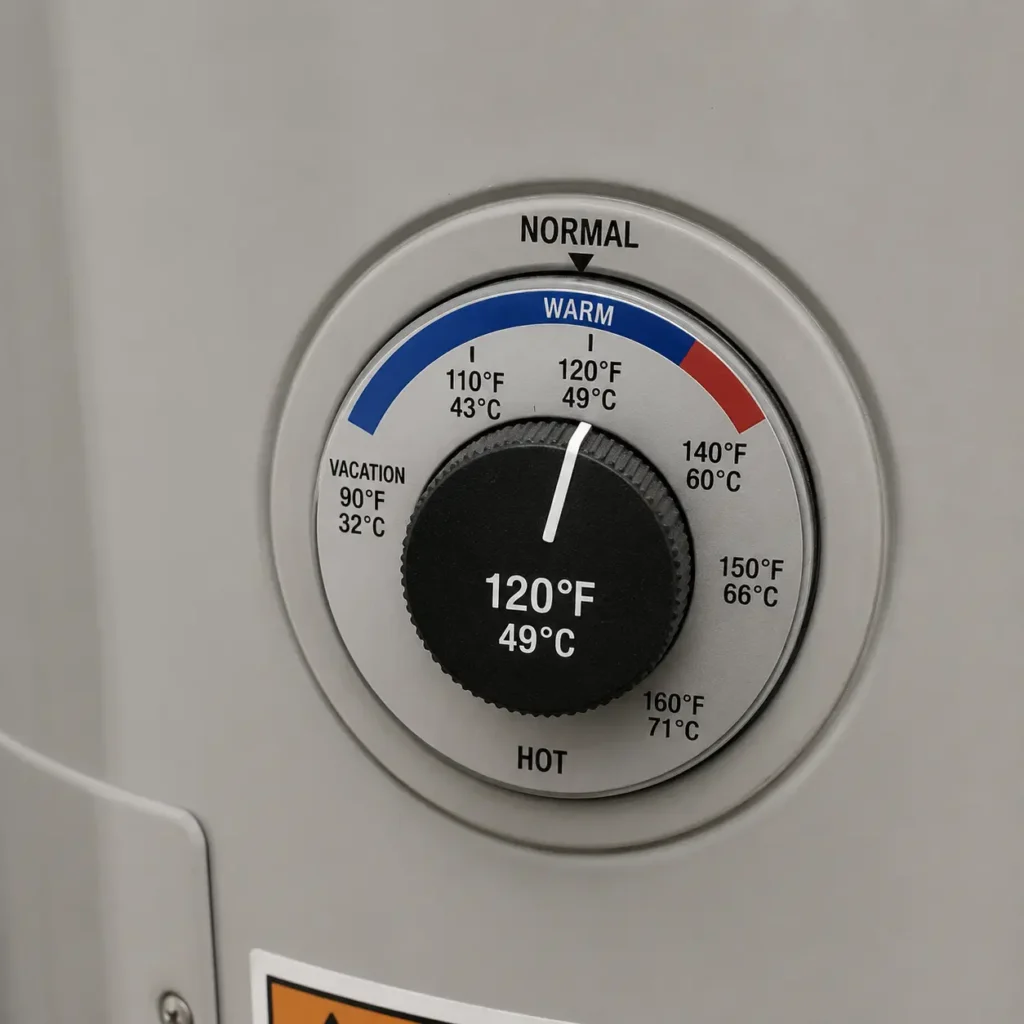
For many households, 120°F is a practical hot water temperature that helps reduce scalding risks and unnecessary energy use. However, some water heater systems may require storage temperatures of 140°F or higher to help manage Legionella bacteria, with mixing valves used to deliver water at safer temperatures to faucets and showers.
The right setting depends on your water heater, plumbing system, household needs, and whether anyone in your home is particularly vulnerable to burns or waterborne illness.
For homeowners in St. Petersburg, Clearwater, and throughout Pinellas County, finding the right balance between hot water comfort and safety is important. Florida’s warm climate does not eliminate the risks associated with excessively hot water or bacterial growth inside plumbing systems.
Setting a water heater too high can increase the risk of burns. Setting it too low may create conditions that allow certain microorganisms to grow, particularly in complex plumbing systems or areas where water remains stagnant.
Understanding the difference between 120°F and 140°F can help you make an informed decision about your water heater’s temperature.
Florida Water Heater Pros provides water heater inspections, maintenance, and troubleshooting throughout Pinellas County, Florida.
Not sure whether your water heater is set correctly? Call Florida Water Heater Pros at 714-686-1649 to request a professional inspection or free phone estimate.
What Is the Best Temperature Setting for a Water Heater?
A temperature of 120°F is commonly recommended for household hot water delivery because it helps reduce scalding risk and energy consumption. However, the appropriate storage temperature may differ from the temperature delivered to faucets and showers.
This distinction is especially important when considering Legionella prevention.
Many residential systems use a storage tank that heats water to a selected temperature. Hot water then travels through pipes to fixtures throughout the home.
Some systems use thermostatic mixing valves to blend hot and cold water, allowing the storage tank to operate at a higher temperature while limiting the temperature delivered to users.
Why Is 120°F Commonly Recommended?
A 120°F setting can offer several practical benefits:
- Lower scalding risk compared with higher temperatures
- Reduced standby heat loss in many storage tank systems
- Less unnecessary heating when household demand is moderate
- Comfortable hot water for many everyday activities
However, 120°F is not completely free of scalding risk.
Prolonged exposure can still cause burns, particularly for young children, older adults, and people with reduced sensitivity or mobility.
Additionally, a 120°F storage setting may not provide sufficient Legionella control in every plumbing system.
Why Do Some Water Heaters Use 140°F?
A storage temperature of 140°F is sometimes used as part of a broader water management strategy intended to reduce Legionella growth.
Higher storage temperatures can also increase the amount of usable hot water when an appropriate mixing system is installed.
However, 140°F water can cause serious burns quickly.
Homes using higher storage temperatures should have suitable temperature-limiting devices and professional guidance to reduce scalding risks.
The correct approach depends on the equipment, plumbing design, and applicable safety requirements.
120°F vs. 140°F: What’s the Difference?
The difference between 120°F and 140°F affects safety, energy use, hot water capacity, and bacterial growth conditions.
| Factor | 120°F | 140°F |
|---|---|---|
| Scalding risk | Lower, but burns are still possible | Significantly higher |
| Energy use | Generally lower standby heat loss | Generally higher standby heat loss |
| Legionella control | May be insufficient for some systems | Can support control when combined with appropriate system management |
| Hot water capacity | Less stored thermal energy | More stored thermal energy |
| Mixing valve considerations | May still be appropriate | Strongly recommended to limit fixture temperatures |
| Typical application | Many household hot water delivery systems | Certain storage systems with appropriate safety controls |
Neither temperature is automatically appropriate for every home.
A plumber can help evaluate the water heater and determine whether the system needs a different storage temperature, a mixing valve, or other adjustments.
Is 120°F Hot Enough for a Water Heater?
For many everyday household uses, water delivered at approximately 120°F is sufficiently hot.
Showers, handwashing, and general cleaning usually do not require water hotter than this at the point of use.
However, household needs and appliance requirements vary.
Some dishwashers have internal heating systems, while others may have specific incoming water temperature requirements.
Always check appliance manufacturer instructions.
Can You Shower With 120°F Water?
Yes. Water at 120°F is hotter than most people need for a comfortable shower.
Showers typically use a mixture of hot and cold water to reach a comfortable temperature.
Even at 120°F, prolonged exposure can cause burns.
Properly functioning shower temperature controls and anti-scald protection remain important.
Is 120°F Safe for Children?
A 120°F delivery temperature reduces scalding risk compared with 140°F, but it does not eliminate the possibility of burns.
Children can be particularly vulnerable because their skin may be injured more quickly.
Supervision, suitable anti-scald devices, and safe fixture temperatures are important.
The water heater thermostat should not be the only protection against scalding.
Is 140°F Too Hot for a Water Heater?
Water stored at 140°F can be appropriate for certain systems, but water delivered directly to fixtures at that temperature presents a serious scalding hazard.
At higher temperatures, burns can occur much more quickly.
The exact injury risk depends on water temperature, exposure time, and individual vulnerability.
For this reason, higher storage temperatures should be paired with appropriate temperature controls.
When Does 140°F Make Sense?
A higher storage temperature may be considered when:
- A qualified professional recommends it for Legionella risk management.
- The plumbing system includes appropriate thermostatic mixing valves.
- The water heater manufacturer supports the operating temperature.
- The system requires higher-temperature storage for a specific application.
- The household has a properly designed hot water distribution system.
Increasing the thermostat alone is not a complete water safety strategy.
What Is a Thermostatic Mixing Valve?
A thermostatic mixing valve blends hot water from the storage tank with cold water to deliver water at a controlled temperature.
For example, a water heater may store water at a higher temperature while the mixing valve reduces the temperature supplied to fixtures.
This arrangement can help balance hot water storage requirements with scald protection.
However, mixing valves must be properly selected, installed, adjusted, and maintained.
A qualified plumber can determine whether a mixing valve is appropriate for your system.
What Temperature Causes Hot Water Burns?
Scalding risk increases as water temperature rises.
Higher temperatures can cause serious burns in shorter periods.
Approximate exposure times commonly cited in scald-prevention guidance illustrate the difference:
| Water Temperature | Approximate Time for a Serious Burn |
|---|---|
| 120°F | Several minutes |
| 130°F | Around 30 seconds |
| 140°F | Around 5 seconds |
| 150°F | Around 1–2 seconds |
| 160°F | Less than 1 second |
These figures are illustrative estimates, not guaranteed safe exposure periods. Burn severity varies with age, skin condition, exposure, and other factors.
Young children, older adults, and people with certain disabilities may be particularly vulnerable.
How Can You Prevent Hot Water Scalding?
Scald prevention involves more than adjusting the water heater thermostat.
Homeowners should consider:
- Appropriate fixture temperature limits
- Properly functioning anti-scald shower valves
- Thermostatic mixing valves where suitable
- Regular inspection of temperature controls
- Supervision of young children during bathing
- Professional evaluation when water temperatures fluctuate unexpectedly
If water suddenly becomes much hotter than usual, stop using the affected fixture until the cause has been identified.
What Is Legionella, and Why Does Water Heater Temperature Matter?
Legionella is a type of bacteria that can grow in building water systems under suitable conditions. Certain species can cause Legionnaires’ disease, a serious form of pneumonia, when contaminated water droplets are inhaled.
Legionella risk is influenced by several factors, including water temperature, stagnation, disinfectant levels, sediment, biofilm, and plumbing design.
Temperature is an important part of controlling bacterial growth, but it is not the only consideration.
What Temperature Does Legionella Grow In?
Legionella can grow in water temperatures roughly between 77°F and 113°F, with particularly favorable growth conditions in portions of that range.
Growth generally becomes less favorable at higher temperatures.
However, bacteria may persist in biofilms or cooler sections of a plumbing system even when the storage tank is maintained at a higher temperature.
This is why managing only the water heater thermostat may not adequately control the risk.
Does Setting a Water Heater to 140°F Kill Legionella?
Higher water temperatures can reduce Legionella survival, but the effectiveness depends on exposure time and whether the entire system reaches the necessary conditions.
Setting a storage tank to 140°F does not guarantee that all bacteria throughout the plumbing system will be eliminated.
Cooler pipes, stagnant branches, mixing valves, and other components can create different conditions.
Legionella control requires an approach appropriate to the building and water system.
Is 120°F Too Low to Prevent Legionella?
A 120°F storage temperature may allow Legionella to persist or grow under certain conditions, particularly where water cools further in the distribution system.
For some households, the overall risk may be relatively low. However, a higher storage temperature or additional water management measures may be appropriate for systems serving vulnerable occupants.
Homeowners should not raise the water heater temperature solely for bacterial control without considering scalding protection.
A qualified professional can help evaluate the system.
Should Florida Homeowners Set Their Water Heater to 140°F?
Not every Florida home needs a 140°F storage setting.
The appropriate temperature depends on the water heater, plumbing configuration, household occupants, and water quality conditions.
For many homes, limiting hot water delivery temperatures is a priority because of the risk of burns.
However, some systems may benefit from higher storage temperatures combined with suitable mixing valves.
Does Florida’s Warm Climate Affect Legionella Risk?
Warm environmental conditions can influence temperatures in plumbing systems.
Water in pipes exposed to heat may remain within ranges favorable to microbial growth under certain conditions.
However, climate alone does not determine whether a household has a Legionella problem.
Water stagnation, plumbing design, disinfectant levels, and system maintenance also matter.
What About Homes With Private Wells?
Private well systems may have different water chemistry and treatment conditions than municipal systems.
Water quality testing and appropriate system maintenance may be useful, especially when odors, discoloration, or other changes occur.
However, water heater temperature adjustments are not a substitute for identifying and treating water quality problems.
How to Check Your Water Heater Temperature
The temperature shown on a water heater control may not match the temperature delivered at a faucet.
Thermostat calibration, plumbing heat loss, mixing valves, and recent water use can affect the result.
A basic temperature check can help identify whether the delivered water is unexpectedly hot or cold.
Step 1: Locate a Suitable Hot Water Faucet
Choose a faucet supplied by the water heater.
Avoid using a fixture where a temperature-limiting device may prevent you from evaluating the system’s general delivery temperature, unless you are specifically checking that fixture.
Step 2: Use a Suitable Thermometer
Use a thermometer designed to measure water temperatures in the expected range.
Avoid touching hot water directly.
Step 3: Run the Hot Water
Allow the hot water to reach a relatively stable temperature.
The time required depends on pipe length, recent water use, and plumbing design.
Step 4: Measure the Temperature Carefully
Collect or measure the flowing water according to the thermometer manufacturer’s instructions.
Keep hands away from potentially scalding water.
Step 5: Compare the Reading With Your System Settings
If the delivered temperature is unexpectedly high, low, or inconsistent, the system may require adjustment or inspection.
Remember that a faucet reading does not necessarily reveal the actual storage tank temperature.
A professional can evaluate both storage and delivery temperatures when needed.
How to Adjust the Temperature on an Electric Water Heater
Electric storage tank water heaters commonly use one or more thermostats located behind access panels.
Some models have separate upper and lower thermostat controls.
Because these components are located near electrical wiring, adjustment requires appropriate safety precautions.
Step 1: Check the Manufacturer’s Instructions
Locate the water heater model and review the approved temperature adjustment procedure.
Do not assume all electric water heaters use the same thermostat design.
Step 2: Disconnect Electrical Power
If the manufacturer’s procedure requires opening an access panel, electrical power must be disconnected and verified safe before work begins.
Electrical components can cause serious injury.
If you are not qualified to work around electrical equipment, arrange professional service.
Step 3: Access the Thermostat as Directed
A qualified technician may remove the appropriate cover and insulation according to manufacturer instructions.
Some models use electronic controls that do not require access to internal electrical components.
Step 4: Adjust the Temperature
The thermostat should be adjusted according to the manufacturer’s instructions and the temperature requirements of the system.
On dual-element models, the upper and lower controls may need coordinated settings.
Step 5: Restore the Equipment and Verify Operation
After the adjustment, the technician restores all covers and safety components.
The water heater is returned to normal operation and the delivered temperature is checked after the system stabilizes.
If the water temperature remains inconsistent, further troubleshooting may be necessary.
How to Adjust the Temperature on a Gas Water Heater
Many conventional gas water heaters have an external temperature control located near the gas control valve.
Some models use numbered settings or labels rather than exact temperature markings.
These labels may not correspond precisely to the delivered water temperature.
Step 1: Locate the Temperature Control
Identify the manufacturer’s approved temperature adjustment control.
Do not confuse the temperature adjustment with the gas shutoff or pilot-light controls.
Step 2: Review the Manufacturer’s Instructions
Follow the recommended procedure for your specific model.
Avoid forcing knobs or changing unfamiliar gas control settings.
Step 3: Adjust the Temperature Setting
Use the appropriate control to select the recommended temperature.
Do not disassemble the gas control valve or modify gas components.
Step 4: Allow the Water Temperature to Stabilize
After an adjustment, the stored water may need time to reach the new temperature.
Step 5: Verify the Delivered Temperature
Use a suitable thermometer to check hot water delivery.
If the temperature remains too high, too low, or inconsistent, arrange professional inspection.
How to Adjust the Temperature on a Tankless Water Heater
Many modern tankless water heaters have digital temperature controls.
Depending on the model, homeowners may be able to adjust the setpoint using a display, remote controller, or manufacturer-approved interface.
Check the Display
Locate the temperature setting on the unit or connected controller.
Follow Manufacturer Instructions
Some models have operating limits or special procedures for changing the setpoint.
Select an Appropriate Delivery Temperature
The correct temperature depends on the system, household needs, and manufacturer requirements.
Verify the Temperature
Check the water temperature at a suitable fixture.
If the water fluctuates unexpectedly, the problem may involve flow rate, controls, sensors, or another component.
Do not attempt to bypass built-in temperature limits.
How to Adjust a Heat Pump Water Heater Temperature
Heat pump water heaters often have electronic controls that allow homeowners to select operating modes and temperature settings.
The available temperature range depends on the manufacturer and model.
Some systems use electric resistance heating to supplement heat pump operation under certain conditions.
Changing the temperature may affect energy use and equipment operation.
Homeowners should follow the manufacturer’s instructions and consider whether the system has a mixing valve or other temperature-limiting device.
If the temperature cannot be adjusted normally or the system produces inconsistent hot water, professional inspection may be necessary.
Does Lowering Your Water Heater Temperature Save Money?
Lowering the storage temperature can reduce standby heat loss in many storage tank water heaters.
When the stored water is cooler, the temperature difference between the tank and the surrounding environment is smaller.
This can reduce the amount of heat lost through the tank insulation.
However, actual energy savings depend on several factors:
- Water heater type and efficiency
- Tank insulation
- Household hot water usage
- Ambient temperature
- Plumbing configuration
- Temperature difference
- Equipment operating conditions
Lowering the temperature does not guarantee a specific reduction in utility bills.
It should also not be done without considering Legionella risk and the needs of the plumbing system.
Why Is My Water Heater Temperature Too High?
If your water is hotter than expected, the problem may involve the thermostat setting, temperature control, or mixing valve.
Possible causes include:
Incorrect Thermostat Setting
The water heater may be set higher than intended.
Some gas control dials use approximate markings rather than precise temperatures.
Faulty Thermostat
A malfunctioning thermostat may allow the water temperature to rise beyond the intended setting.
Mixing Valve Problems
If a thermostatic mixing valve fails or is incorrectly adjusted, water delivered to fixtures may become hotter than expected.
Control System Malfunction
Electronic controls, sensors, or other components may not operate correctly.
If the water becomes dangerously hot, stop using the affected fixtures and arrange professional service.
Why Is My Water Heater Not Getting Hot Enough?
Insufficient hot water can result from temperature settings, heating problems, or household demand.
Possible causes include:
- Thermostat settings that are too low
- Faulty electric heating elements
- Gas burner or ignition problems
- Sediment buildup
- Tankless flow or ignition issues
- Heat pump operating conditions
- A water heater that is undersized for household demand
- Malfunctioning mixing valves
Raising the temperature is not always the correct solution.
If the equipment cannot maintain the selected temperature, a professional should inspect the system.
Can Regular Maintenance Help Keep Water Heater Temperatures Consistent?
Routine maintenance can help identify components and operating conditions that affect hot water performance.
Depending on the equipment, a professional may inspect accessible controls, check for sediment-related problems, evaluate heating performance, and review temperature-related concerns.
Florida Water Heater Pros provides water heater maintenance services in St. Petersburg, FL for homeowners throughout Clearwater and Pinellas County. Our licensed and insured plumbing team can evaluate inconsistent hot water temperatures, inspect the equipment, and recommend appropriate maintenance or repairs.
The recommended service depends on the water heater type, manufacturer instructions, and condition.
Maintenance may help identify problems, but it cannot guarantee that every temperature issue will be resolved without repairs.
What Is the Best Water Heater Temperature for Different Households?
The appropriate temperature depends on the needs of the household and the design of the plumbing system.
Homes With Young Children
Scald prevention is particularly important.
Temperature-limiting devices and safe delivery temperatures can help reduce burn risks.
A qualified professional can evaluate whether additional protection is needed.
Homes With Older Adults
Older adults may have reduced mobility or sensitivity that increases vulnerability to burns.
Appropriate fixture temperature limits and anti-scald protection are important.
Homes With Immunocompromised Occupants
Some occupants may be more vulnerable to severe illness from waterborne pathogens.
A qualified professional should evaluate whether the plumbing system needs additional Legionella risk controls.
Higher storage temperatures may be considered as part of an appropriate water management strategy, but scald protection remains necessary.
Homes With High Hot Water Demand
Households with frequent showers, laundry, and other hot water needs may benefit from evaluating water heater capacity and system design.
Higher storage temperatures combined with appropriate mixing equipment may increase usable hot water in some systems.
However, temperature adjustments should not replace proper equipment sizing.
Vacation Homes and Seasonal Properties
Homes that remain unoccupied for extended periods may experience water stagnation.
Water management and safe return-to-service procedures may be appropriate after prolonged periods without use.
The correct approach depends on the plumbing system and duration of vacancy.
Frequently Asked Questions About Water Heater Temperature
What is the recommended water heater temperature?
For many households, approximately 120°F is a practical hot water delivery temperature. However, some systems may require higher storage temperatures with mixing valves to manage bacterial growth while reducing scalding risks.
Is 120°F or 140°F better for a water heater?
It depends on the system. A 120°F setting can reduce scalding risk and standby heat loss, while 140°F storage may support Legionella control when combined with appropriate plumbing design and temperature-limiting devices.
Is 120°F hot enough to shower?
Yes. Water at 120°F is hotter than most people need for a comfortable shower. Mixing with cold water and appropriate anti-scald protection remain important.
Is 140°F too hot for household water?
Water delivered directly to fixtures at 140°F presents a serious scalding risk. Higher storage temperatures should be paired with suitable temperature-limiting controls.
Does 140°F kill Legionella?
Higher temperatures can reduce Legionella survival, but effectiveness depends on exposure time and conditions throughout the plumbing system. A 140°F storage setting alone does not guarantee elimination.
Can Legionella grow at 120°F?
Legionella may persist or grow under certain conditions, especially where water cools further or remains stagnant. The overall risk depends on the plumbing system and water management practices.
How do I check my water heater temperature?
Use a suitable thermometer to measure hot water at a faucet after the temperature stabilizes. The delivered temperature may differ from the storage tank setting.
How do I adjust an electric water heater thermostat?
Follow the manufacturer’s instructions. Many electric models have thermostats behind electrical access panels, so professional service is recommended if you are not qualified to work around electrical equipment.
How do I adjust a gas water heater temperature?
Many gas water heaters have an external temperature control. Follow the manufacturer’s instructions and verify the delivered water temperature after the system stabilizes.
Does lowering the water heater temperature save electricity?
Lower storage temperatures can reduce standby heat loss in many tank systems. Actual savings depend on equipment efficiency, insulation, usage, and operating conditions.
Should I turn up my water heater if I run out of hot water?
Not necessarily. Running out of hot water may indicate insufficient capacity, heating component problems, or excessive household demand. A professional can identify the cause.
Does Florida Water Heater Pros adjust water heater temperatures in Clearwater?
Florida Water Heater Pros provides water heater inspections, maintenance, and troubleshooting throughout Clearwater, St. Petersburg, and Pinellas County. Contact the team to discuss temperature control concerns and service options.
Professional Water Heater Temperature Inspection in Pinellas County
Choosing the right water heater temperature involves balancing comfort, scald protection, energy use, and water system safety.
For many households, 120°F is a practical hot water delivery temperature. However, some systems may require higher storage temperatures with appropriate mixing valves and other controls.
Florida Water Heater Pros provides water heater inspections, maintenance, repairs, and replacements throughout St. Petersburg, Clearwater, Largo, Dunedin, Palm Harbor, Safety Harbor, Pinellas Park, and surrounding Pinellas County communities.
Our licensed and insured plumbing team can inspect your water heater, evaluate inconsistent temperatures, and explain whether adjustment, maintenance, or repair is appropriate.
We work with residential and commercial electric, natural gas, propane, tankless, and heat pump water heaters.
Whether your water is too hot, not hot enough, or fluctuates unexpectedly, our team can help identify the next step.
Schedule a Water Heater Temperature Inspection or Request a Free Estimate
Not sure whether your water heater is set to the right temperature? Let a qualified professional help you evaluate the system.
Call Florida Water Heater Pros at 714-686-1649 to request professional water heater troubleshooting, maintenance, or get a free phone estimate.
We serve homeowners and businesses throughout St. Petersburg, Clearwater, and Pinellas County, Florida.
Florida Water Heater Pros
Phone: 714-686-1649
Service Area: St. Petersburg, Clearwater, and Pinellas County, FL
Florida Plumbing License: CFC1432953
Licensed and Insured
Registered DBA: Pop Leland Plumbing
